
The Barista Express from Sage/Breville is one of the best home espresso machines, especially for those who want to start experimenting with advanced brewing methods using non-pressurized filters.
It was the first machine of this kind I had at home, and I bought it based on those very same recommendations. I wanted to take a real step up in quality, to make espresso that could rival what I was getting at specialty coffee shops. I believe it’s a great machine for that purpose, and in this article, I’ll explain why, along with the best and worst aspects I found during the year I used it.
The Best of the Sage Barista Express
Perfectly Capable of Making a Great Espresso
The first and most important point is that the Barista Express can pull a truly great espresso. I’m talking about shots with body, rich crema, and that concentrated flavor that defines specialty coffee.
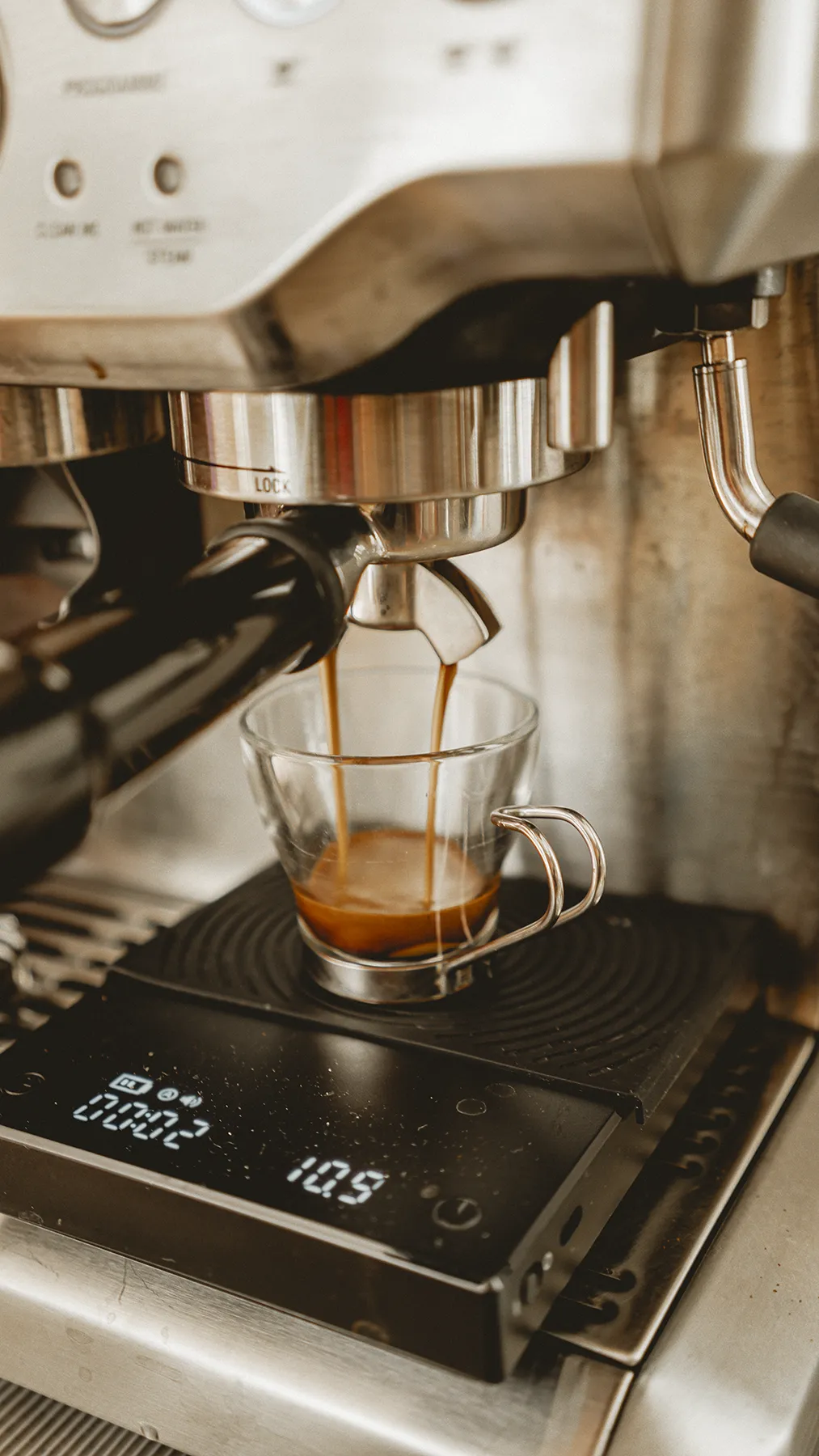
It also has a fairly approachable learning curve for those stepping into the world of espresso for the first time. The Barista Express does require some time and patience at the beginning, but it’s far from impossible to master.
The key to getting good results—and not getting frustrated early on—is understanding the fundamentals of espresso extraction: ratios, time, grind, dose, and temperature. If these concepts mean nothing to you, this isn’t the right machine for you. But if you already have a basic understanding and want to take your first real steps as a home barista, it absolutely is.
The Grinder Is Better Than People Say
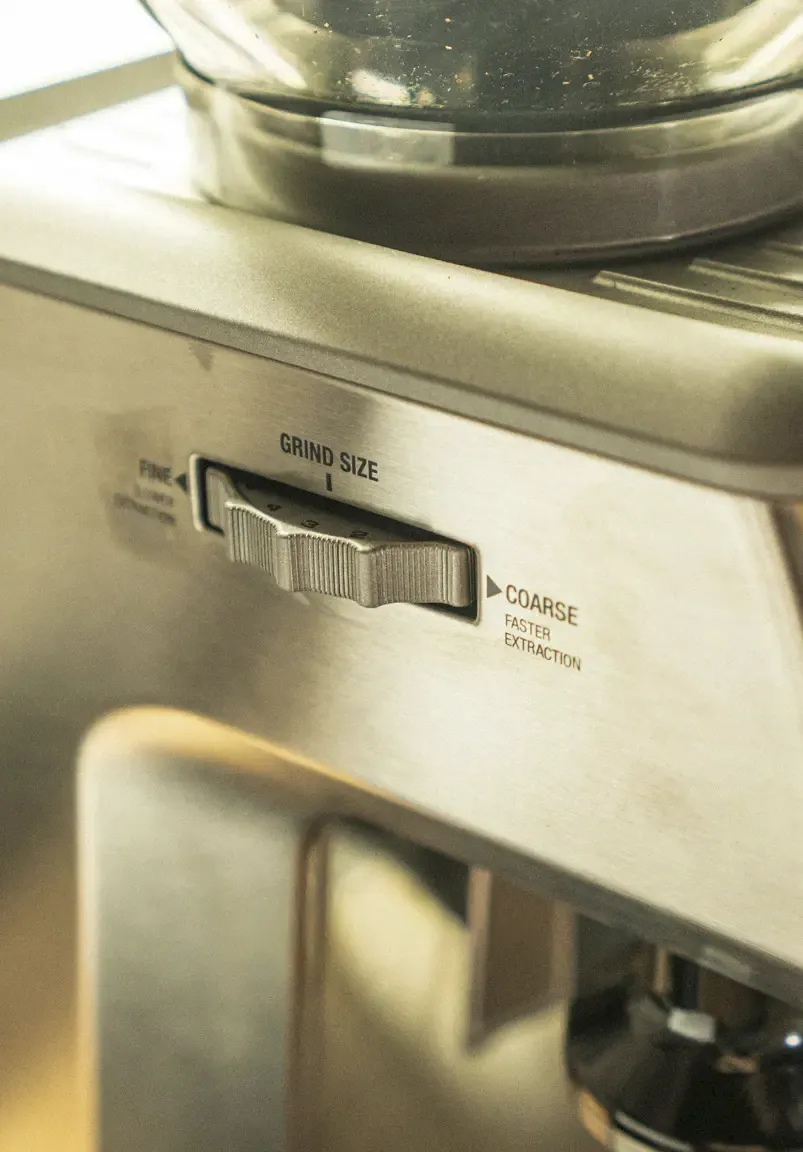
The built-in grinder on this machine has been a topic of debate in forums and specialty coffee blogs. It’s a stainless-steel conical burr grinder with 16 external settings and 8 internal ones, giving you a total of 24 grind adjustments.
The most common criticism concerns its adjustment mechanism. For many types of coffee beans -especially medium and light roasts- you’ll often need to remove the hopper and take out the top burr to access those 8 internal settings and achieve a finer grind. If you nail the grind size, great, but if you need to tweak it, you’ll have to open the hopper again and repeat the whole process.
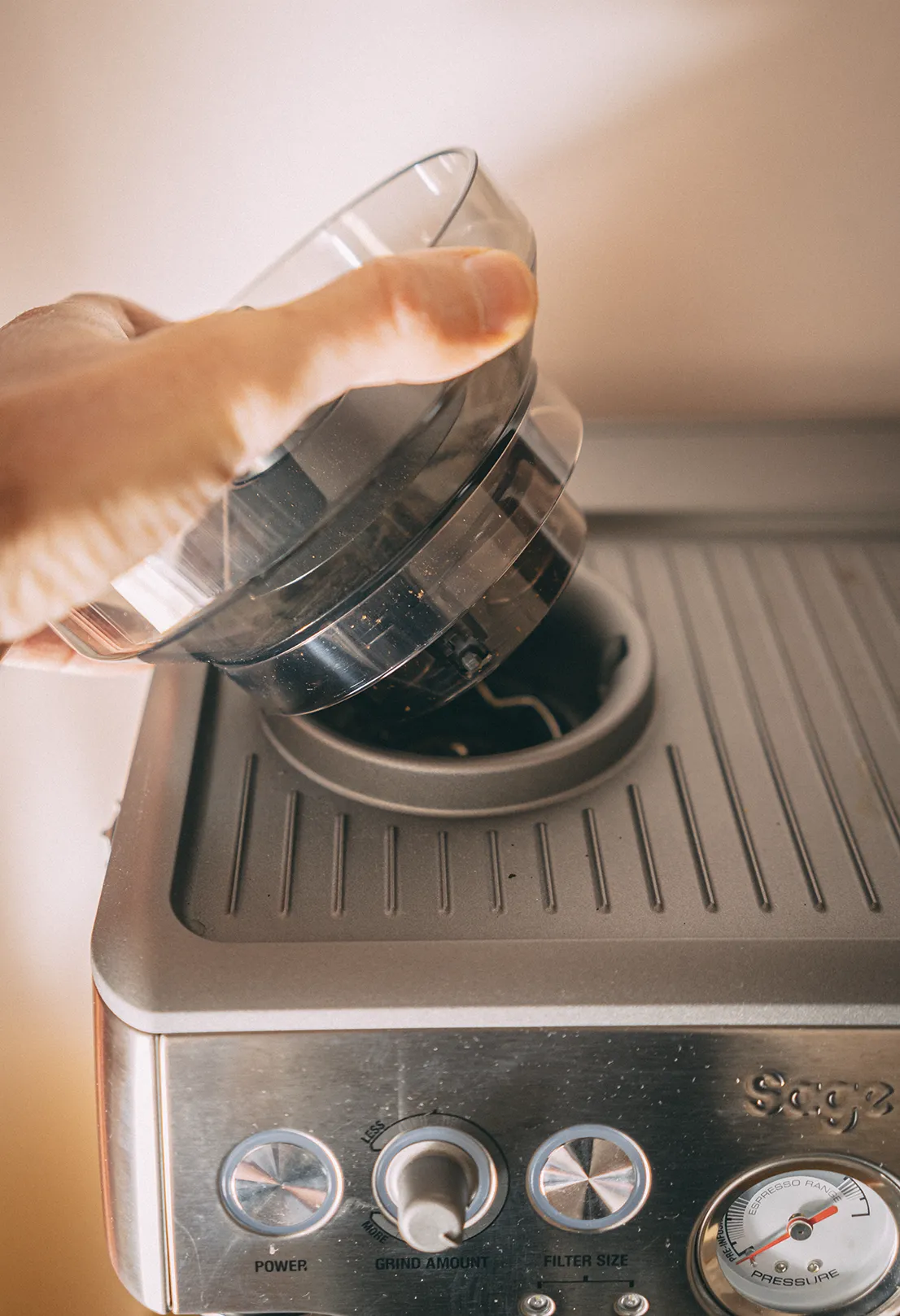
So, the problem isn’t that the grinder can’t grind fine enough for espresso—it definitely can—but that the calibration process is a bit cumbersome. In terms of grind quality, though, the truth is that it’s more than decent. Sure, there’s some static and a bit of retention, but nothing major or unusual compared to other machines with built-in grinders in this price range—or even pricier ones.
Very Strong Thermal Performance
One of the best things about the Barista Express, without a doubt, is its thermal performance. It uses a Thermoblock system, so it takes a little while to heat up, but when it does, it really does.
The brew group and portafilter get quite hot after about 15 minutes of being on. This is great because when the coffee flows through a hot portafilter, it stays warmer in the cup for longer. A hot group head also enhances thermal stability, which is one of the key factors for a good extraction.
Another bonus of it getting that hot is the cup-warming tray on top actually works, unlike on many machines where it barely warms the cups. Here, if you leave your cups on top, you’ll notice that after 15 minutes they’re genuinely hot.
Very Decent Manual Steam Wand
The steam wand is good—not spectacular—but of more than enough quality to learn proper manual milk texturing. It offers solid power and full range of motion, allowing you to position it correctly to create the ideal milk texture.
However, since it only has a single hole, it requires a bit more technique and patience compared to more advanced models. But once you get the hang of it, you can produce silky, elastic microfoam that’s perfect for cappuccinos, lattes, or flat whites.
The machine also comes with a stainless steel milk jug with an integrated thermometer, which helps you monitor the ideal milk temperature (around 65 °C). It’s a great accessory from Sage and very useful when you’re learning the technique.
Practical Design and Easy Maintenance
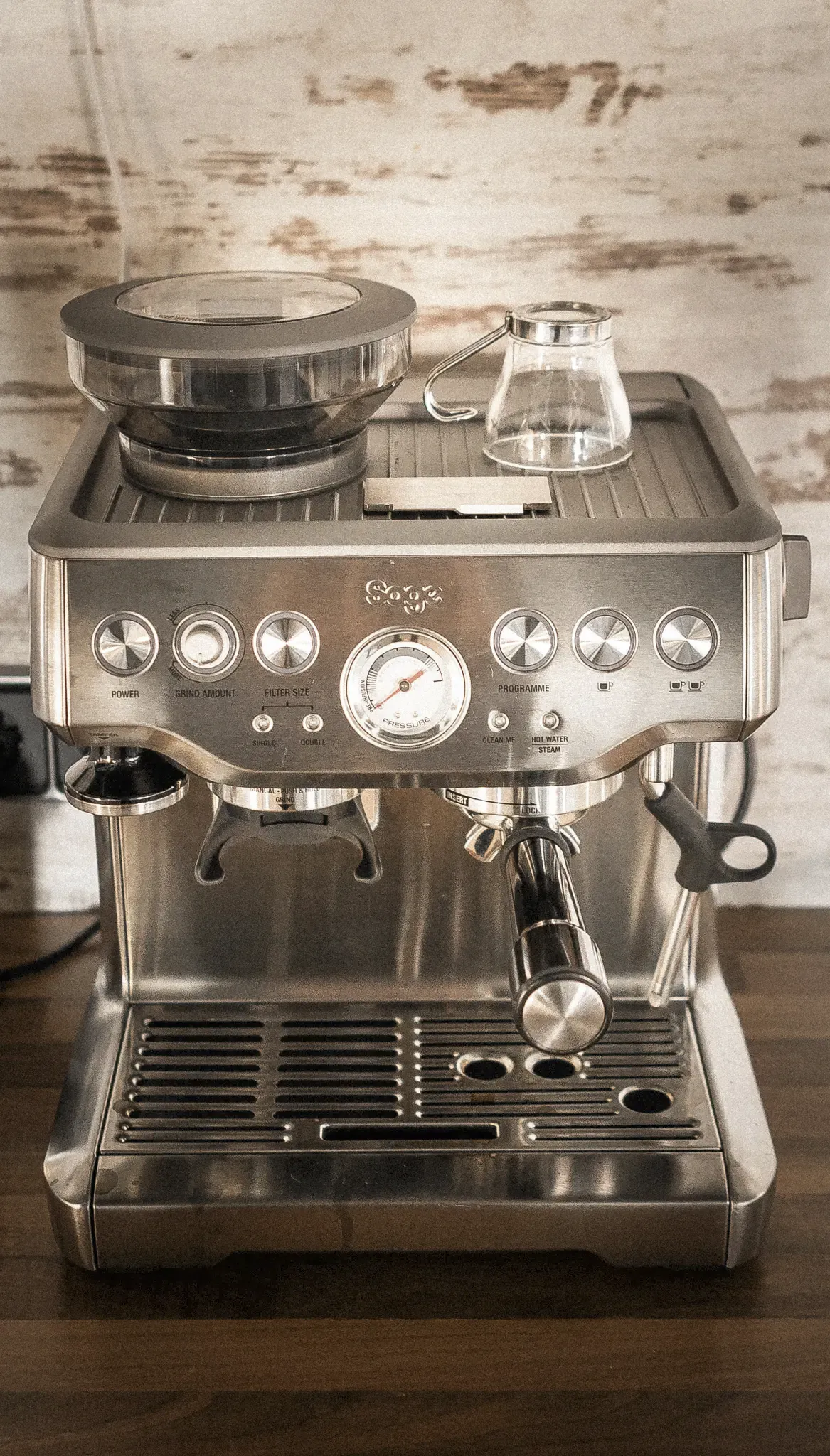
The Barista Express features a sleek, understated design with a predominance of stainless steel. But what really stands out are the small, thoughtful details made for everyday use:
- Magnetic tamper holder
- Hidden drawer behind the drip tray for accessories and filters
- Large drip tray with a clear “full” indicator
- Removable 250 g coffee bean hopper that’s easy to clean
These are the kinds of features you come to appreciate in daily use. It’s also quite easy to clean and maintain. The machine comes with a complete maintenance kit: cleaning tablets, water filter, descaler, and a blind filter for backflushing.
Yes, the Barista Express does have a three-way valve, allowing for proper backflushing—a big advantage for keeping the internal components clean over time. It also helps the coffee puck eject more easily from the portafilter. Not many machines in this price range include a three-way valve, so this is definitely a plus.
The Not-So-Good
Extraction at 13-14 Bars in Older Models
In my Bambino Plus review I mention that one of the best things about that machine is its 9-bar extraction pressure. That’s not the case with the Barista Express, which typically extracts at around 13 or 14 bars.
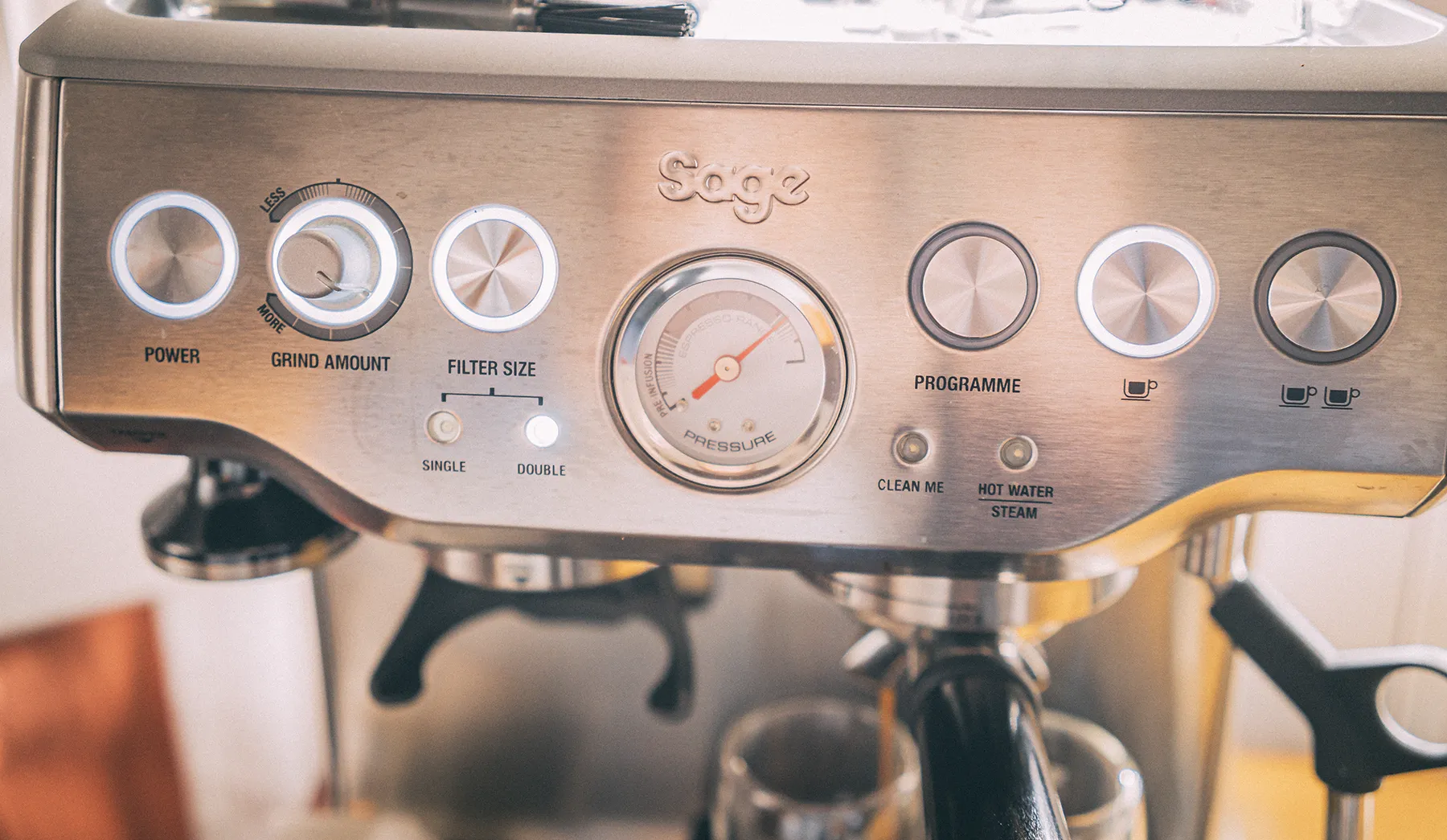
You can clearly see it on the pressure gauge: the needle almost always goes beyond the “ideal espresso” zone. No matter how well you calibrate the grinder or prepare your puck, the Barista Express doesn’t have its OPV (overpressure valve) set to 9 bars, so extractions tend to run at higher-than-ideal pressure for espresso.
However, this isn’t true for all units. It appears that starting in 2022, Sage began shipping the Barista Express with the OPV pre-adjusted to 9 bars, like the rest of the brand’s machines. The issue is that there’s no easy way to know whether a particular unit has the updated OPV or the older one.
If you happen to get an older model, there’s a mod that allows you to manually adjust the OPV but do it at your own risk, as it may void the warranty.
Imprecise Dosing and Cumbersome Grind Adjustment
The machine doses coffee based on time rather than weight. This means that every time you change beans or adjust the grind, the actual amount that drops into the portafilter changes as well.
The result: if you want consistent shots, you’ll almost certainly need to use a scale. In any case, a coffee scale is an essential tool in any home barista’s setup and probably the first accessory I’d recommend to anyone.
As for grinder calibration, I’ve already mentioned the main issue: whenever you need to fine-tune the grind beyond the external settings, you have to remove both the hopper and the upper burr. It’s not difficult, but it is a bit of a hassle.
The Dosing Funnel is Not Always Included
Sage has started including the Dosing Funnel with some of its machines. It’s a dosing ring that attaches to the portafilter to prevent ground coffee from spilling out while the grinder is running.
In my opinion, the Dosing Funnel should be standard on all units. The problem is that it depends on the production batch: some machines include it, while others don’t. For a machine at this level, it’s a bit of a letdown that it’s not always included. If earlier I said the coffee scale is the first accessory you should own, the Dosing Funnel is definitely the second.
Conclusion: Still a Recommended Machine, Though Facing More Competition
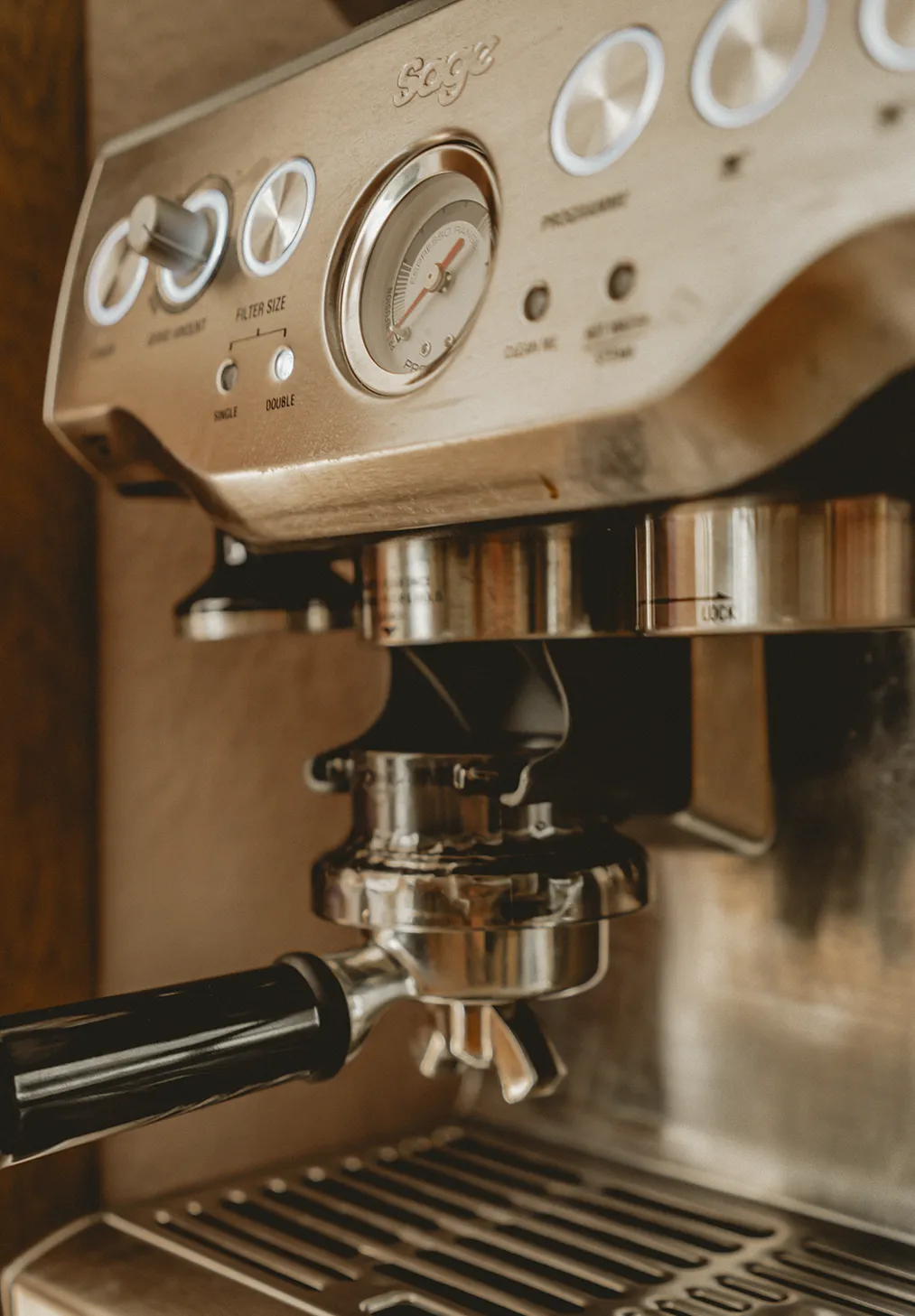
If you ask me whether the Sage Barista Express is still one of the best entry-level machines for aspiring baristas, and whether I’d still recommend it today, my answer would be yes, though not as strongly as I would have four or five years ago.
In that time, many similar machines have entered the market, some at lower prices than the Barista Express. One of them is the De’Longhi Specialista Arte, a frequently recommended alternative in this price range, with a few drawbacks but also some advantages compared to the Barista Express.
However, despite being slightly more expensive, the Barista Express still holds a key advantage: its grinder is better than all of them. In my opinion, it remains the best espresso machine with a built-in grinder you can buy, specially for beginners.