

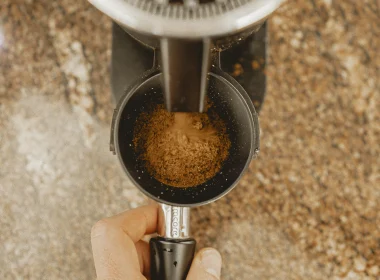


With a compact footprint yet packed with high-end espresso machine features, the Bambino Plus by Sage/Breville has been recommended for years across coffee forums and by expert baristas as one of the best machines for pulling espresso at home.
Is it really that good? This time I’m taking a different approach to my review—highlighting the 5 aspects that make it worth your money, while also sharing my one criticism and where I believe this machine could be improved.

Sage The Bambino Plus
Power: 1600 W | Pump: 15 bar | Heating system: ThermoJet | Portafilters and baskets: 4 x 54 mm, pressurized and unpressurized | Control panel: Analog | Automatic / Manual dosing: ✓ | Pressure gauge | Steam wand: 4 holes, manual or automatic use | Water reservoir: 1.9 liters | Hot water spout | Dimensions: 19.5 x 32 x 31 cm | Weight: 6.6 kg
Extraction at 9 Bars
Without a doubt, the standout feature of the Bambino—and Sage machines in general—is that they come with the OPV (over-pressure valve) factory-set to extract at 9 bars. Inexplicably, most manufacturers still get this wrong, continuing to produce and sell espresso machines that extract at 13, 14, or even 15 bars—an excessive and unnecessary pressure.
The benefits of 9-bar extraction are significant: the main one is more even extraction with fewer channeling issues. I noticed this firsthand when I switched from the Sage Barista Express (which extracts around 13 bars) to the Bambino Plus—channeling was noticeably reduced.

With less channeling, the flavor becomes clearer and cleaner. This means the tasting notes described in your coffee’s profile (chocolate, nuts, citrus, etc.) come through more distinctly. When channeling occurs, water rushes through weak spots in the puck, over-extracting those areas while under-extracting others. But with even water distribution across the entire puck, you capture the full range of aromatics and nuances, resulting in a more balanced espresso where fruity or floral notes can shine through, while burnt or metallic flavors are minimized.
Pre-infusion at 3 bars
Another area where Sage outpaces other brands is pre-infusion. Most home espresso machines simply release a small amount of water to wet the coffee puck before extraction begins.
Pre-infusion is beneficial because it saturates the puck, causing the ground coffee to expand and bloom. This eliminates air pockets that cause channeling and helps dissolve the most soluble compounds—primarily acids and sugars—more easily.
The Bambino Plus takes a more effective approach: it pre-infuses at 3 bars, a low pressure that allows water to penetrate deeper and more evenly throughout the puck. With the basic pre-infusion systems found on other machines, water may not reach the entire coffee bed uniformly, leading to frequent channeling issues during extraction.
The only thing I wish it had is adjustable pre-infusion time. Out of the box, the Bambino Plus runs an 8-second pre-infusion. There is a manual mode where you hold the button to control pre-infusion, and once you release it, full extraction begins (which you can then stop by pressing again). The drawback is that even in manual mode, pre-infusion maxes out at 10 seconds.
Very Powerful Steam Wand
The steam wand is another strong point of the Sage Bambino Plus. While the machine’s biggest selling point is its automatic milk texturing capability, I find the manual mode far more compelling—the steam wand delivers impressive power.

But it’s a progressive, controllable power that allows for proper milk texturing: first incorporating air and steam, then generating the vortex needed to create silky, microfoam with the perfect consistency for flat whites or cappuccinos.
I’m less impressed with the automatic texturing, as it tends to produce overly airy milk in most settings. The best results I’ve achieved using automatic mode came from setting the temperature to level two and the texture to level one.
One advantage of automatic texturing is the ability to steam small amounts of milk—useful when making a cortado, for instance. In those cases, I can pour just a small amount into the pitcher and let the machine handle it, something that’s nearly impossible to do manually.
The Three-Way Solenoid Valve
The Sage Bambino Plus features a three-way solenoid valve—one of the key differences between it and its smaller sibling, the standard Bambino (along with the automatic milk frother).
The three-way valve drains residual water from the portafilter immediately after extraction finishes. It opens a “third pathway” (hence the name) that diverts this water into the drip tray. By evacuating the excess water, the portafilter stops dripping post-extraction, and the spent puck knocks out much more easily—the pressure release leaves it drier and looser.
The three-way valve also enables backflushing, which helps keep the machine’s internal components cleaner over time.
Compact design
The compact design has also won me over. It’s not just compact—it’s lightweight, which has even allowed me to take it on trips when visiting family or staying in vacation rentals.
Of course, having an appliance that doesn’t hog counter space is a major plus. Paired with a grinder like the DF54 or the Baratza Encore ESP, it actually takes up less space than any machine with a built-in grinder.
There’s one minor downside related to its light weight, which some users have noted: when locking in the portafilter, you need to brace the machine with your other hand, or it’ll shift around. Personally, this hasn’t bothered me much.
Non-adjustable temperature
I think the only real flaw regarding espresso extraction is that the Bambino Plus lacks temperature adjustment. The machine has an internal PID that maintains consistent temperature during extraction, though the actual temperature varies quite a bit depending on several factors.

The issue stems from the ThermoJet technology—a more compact thermoblock that’s ready in just 3 seconds after powering on. However, being “ready” in 3 seconds doesn’t mean it’s at ideal brewing temperature: the ThermoJet extracts at progressively higher temperatures as it’s used.
A Reddit user documented this phenomenon and found that on the first blank shot, the Bambino Plus reached only 187°F (86°C)—far too cool. On the second shot, temperature rose to 198°F (92°C), much more suitable. The third shot hit 204°F (95°C), with the maximum recorded temperature reaching 208°F (97°C) by the fifth shot.
What this means in practice is that to ensure proper extraction temperature, you should pull at least one blank shot before brewing—preferably with the pressurized basket, as it forces higher pressure through the system. For medium or dark roasts, a single flush is usually sufficient to bring the ThermoJet up to temperature.
However, for light roasts, you may need two or three blank shots to reach the higher temperatures (95-96°C / 203-205°F) these coffees require, since their less-degraded cell structure demands more heat for proper extraction.
For this reason, the general consensus in enthusiast communities and barista forums is to steer clear of the Bambino Plus if you primarily drink light roasts—though it’s perfectly usable with these coffees if you don’t mind the extra flushing routine before each shot.
My Verdict on the Bambino Plus: The Positives Outweigh the Negatives
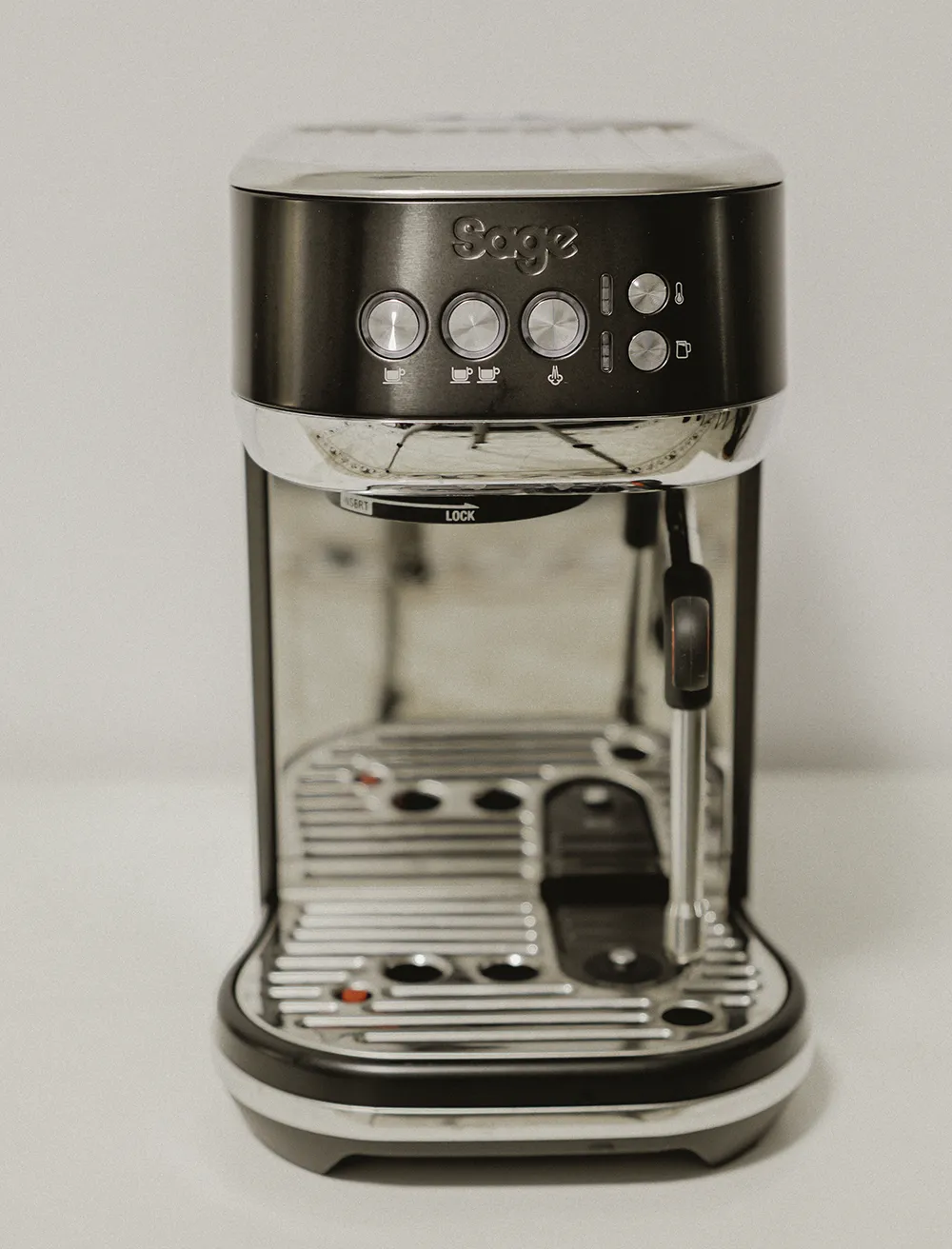
While the two downsides I’ve mentioned are real drawbacks, I don’t think they’re dealbreakers—the positives far outweigh them.
It’s particularly well-suited for those getting started with specialty coffee at home, especially if you favor medium roasts and avoid light roasts. Just keep in mind that to unlock its full potential, you’ll need to pair it with a quality espresso grinder capable of grinding fine enough for the unpressurized baskets. It makes an excellent pairing with a grinder like the Baratza Encore ESP Pro, creating a compact yet capable espresso setup. Using the Bambino Plus with pressurized baskets or pre-ground supermarket coffee would be a waste of a genuinely capable machine.

