



Last year I tested the De’Longhi Specialista Arte Evo and was quite impressed with it. De’Longhi has been steadily improving the “La Specialista” line over the years with each new model they’ve released, and the new Specialista Opera is once again an upgrade over previous models.
This Opera model comes with several interesting new features: a three-way valve, more grind settings and a dynamic pre-infusion system that’s significantly better than what was available on previous years’ models. I’ll be covering all of this in my review after having the chance to test it at home.
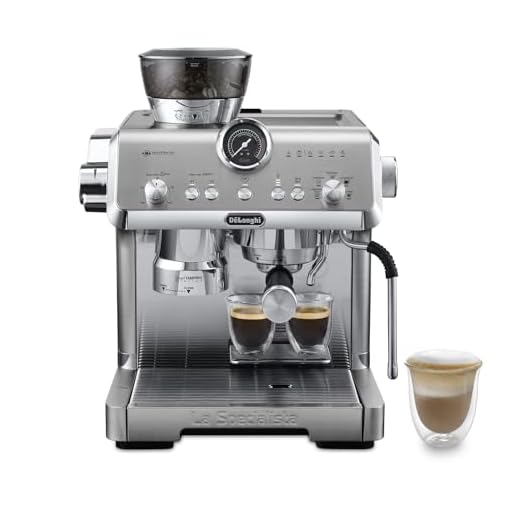
De’Longhi “La Specialista” Opera
Power: 1850 W | Pump: 19 bar | Heating System: Thermoblock with PID temperature control | Grinder: Conical burr, 15 grind settings | Display: Analog | Bean Hopper: 250 g | Water Tank: 2 L | Programmed Recipes: 1 and 2 cups, with customizable volume | Frother Type: Manual steam wand, professional | Maximum Cup Height: 135 mm | Dimensions: 356 x 381 x 445 mm | Weight: 17.5 kg (38.5 lbs).
Unboxing, Design, Components
One of the most surprising things when you take the coffee maker out of the box is how heavy it is. I hadn’t checked beforehand, but I look it up on De’Longhi’s website and see that this Specialista Opera weighs a whopping 37.5 pounds—nearly double the weight of the Specialista Arte models. It’s by far the heaviest espresso machine I’ve ever had in my home.
The machine is very well protected in the box. Once I take it out and place it on the counter, I understand why it’s so heavy: the build quality is excellent. The housing is dominated by stainless steel, and it feels absolutely solid. It’s several steps above previous models—this feels like a truly premium espresso machine.

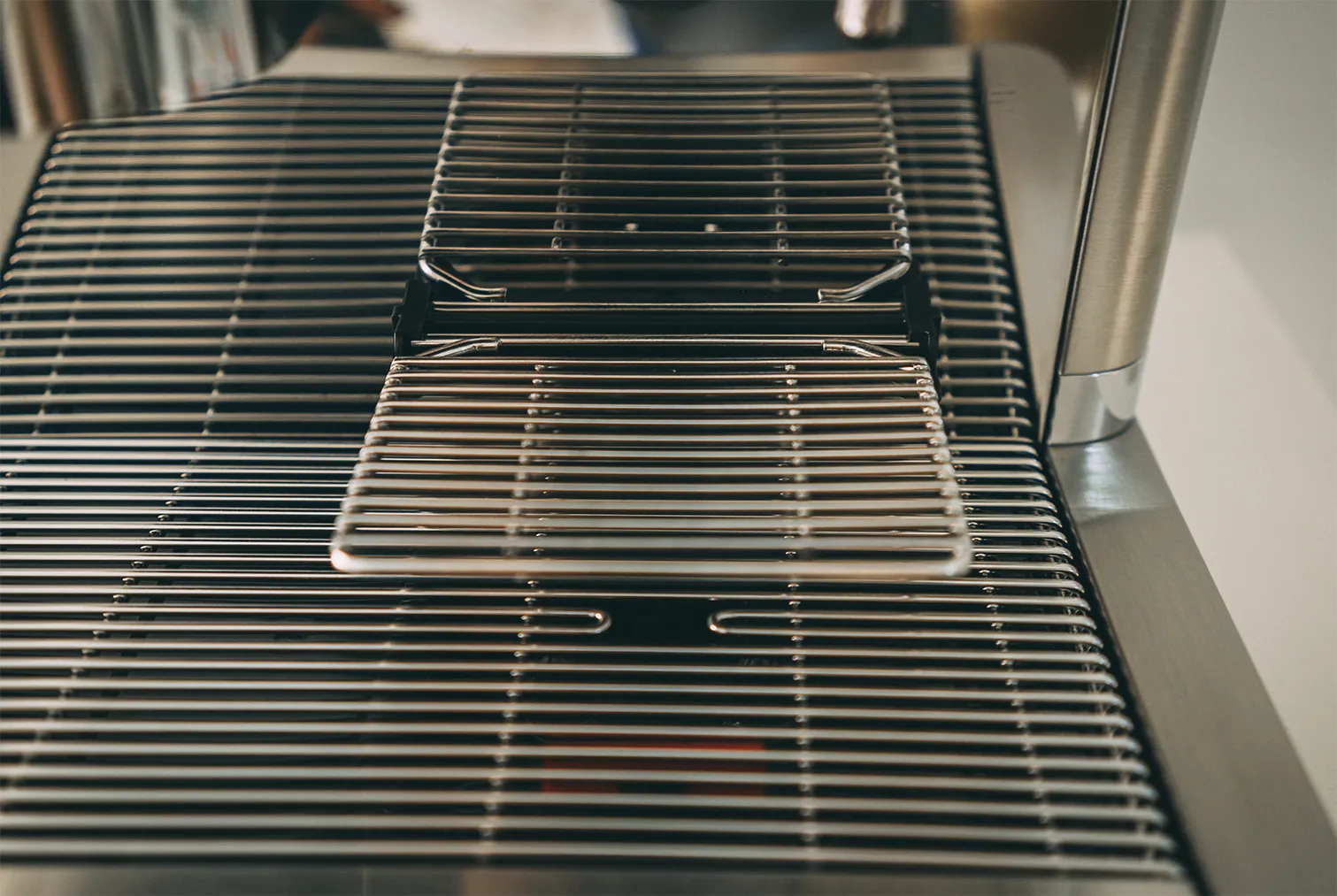
Overall, you can tell that De’Longhi has put more effort and attention into the details. One that I loved, even though it might seem trivial: the drip tray grate is fantastic and feels much more durable. The drip tray itself is plastic but is better designed than on the Specialista Arte. The touch of having a second foldable tray that lets you position small cups closer to the portafilter outlet to avoid splashing—that completely won me over.
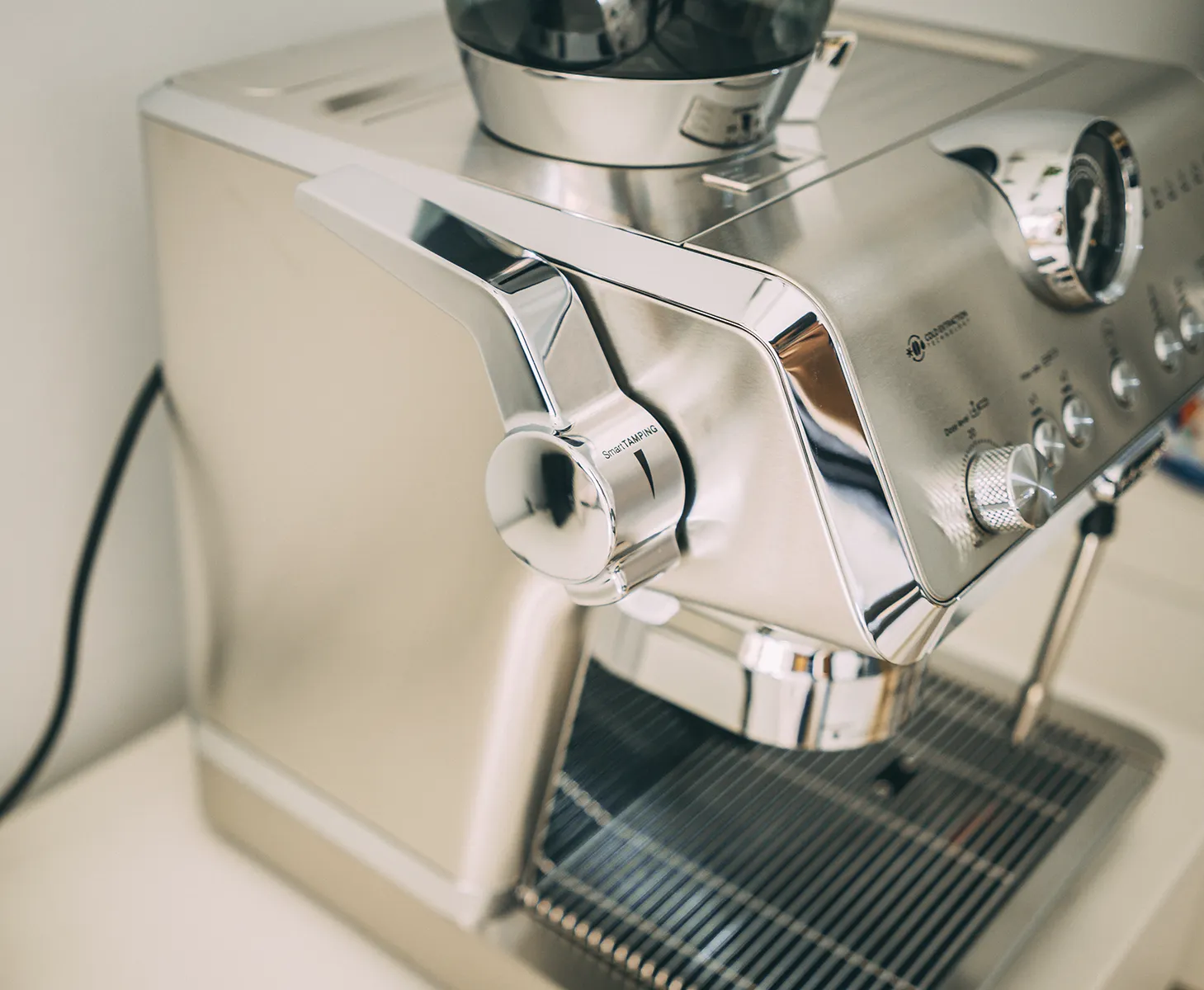
On the left side of the machine is the Smart Tamping lever, one of this machine’s main selling points. It’s an assisted tamping system, which we’re starting to see more and more of these days. I’ll explain exactly how it works later on.
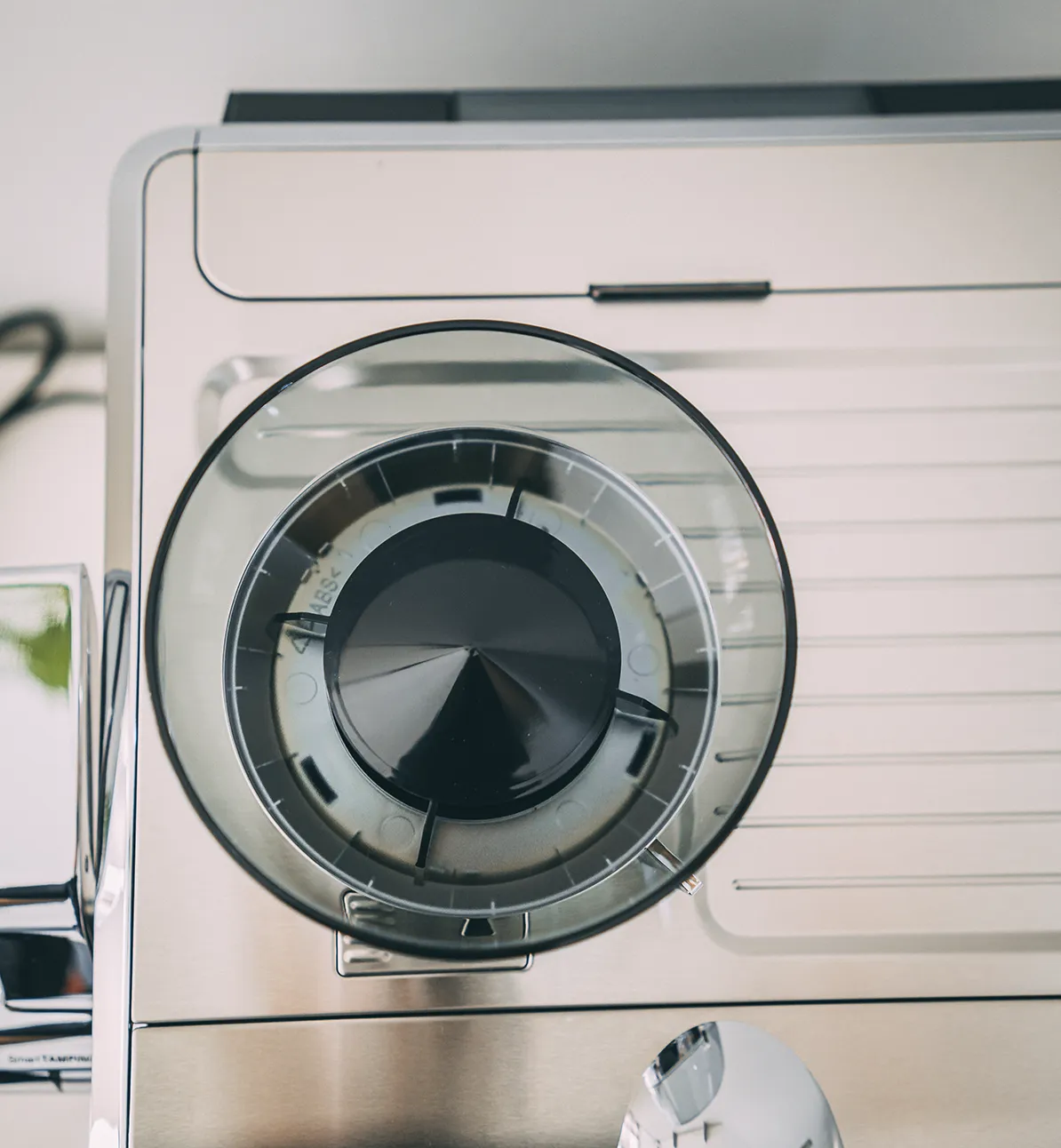
On top is the coffee bean hopper with the grind adjustment dial, and in the back, tucked behind the machine, is the water tank with a generous 2-liter (68 oz) capacity. Very conveniently, the tank lid allows you to fill it without removing it, which is useful because taking it out isn’t exactly easy.
There’s a small cup warming tray—though in this case it’s really just a cup storage shelf, since it doesn’t actually heat up at all.
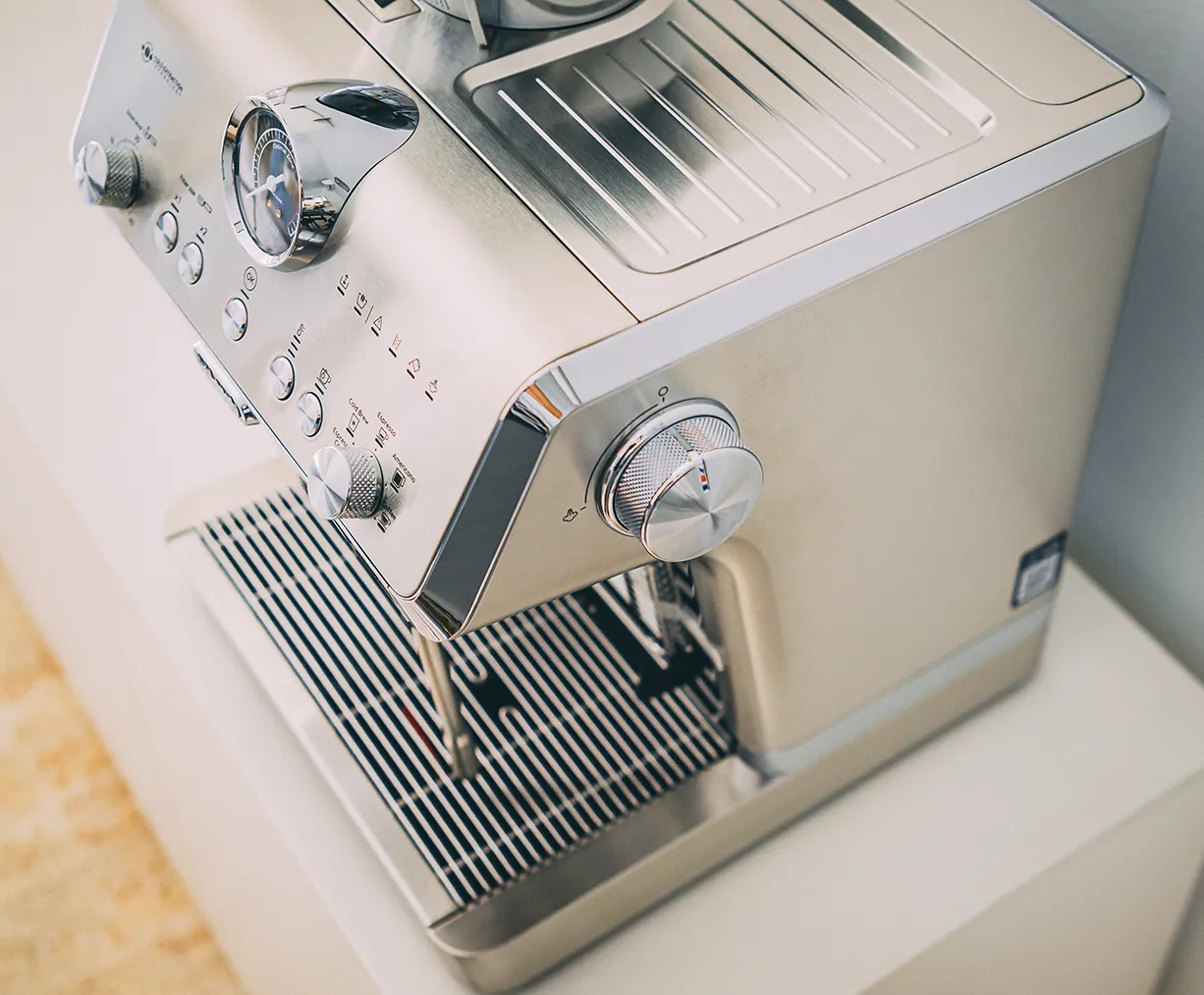
On the right side, there’s just the steam knob. Unlike most pump espresso machines, there’s no button to activate the steam circuit—you simply turn the knob to the steam position and wait a few seconds for the machine to heat up the circuit.
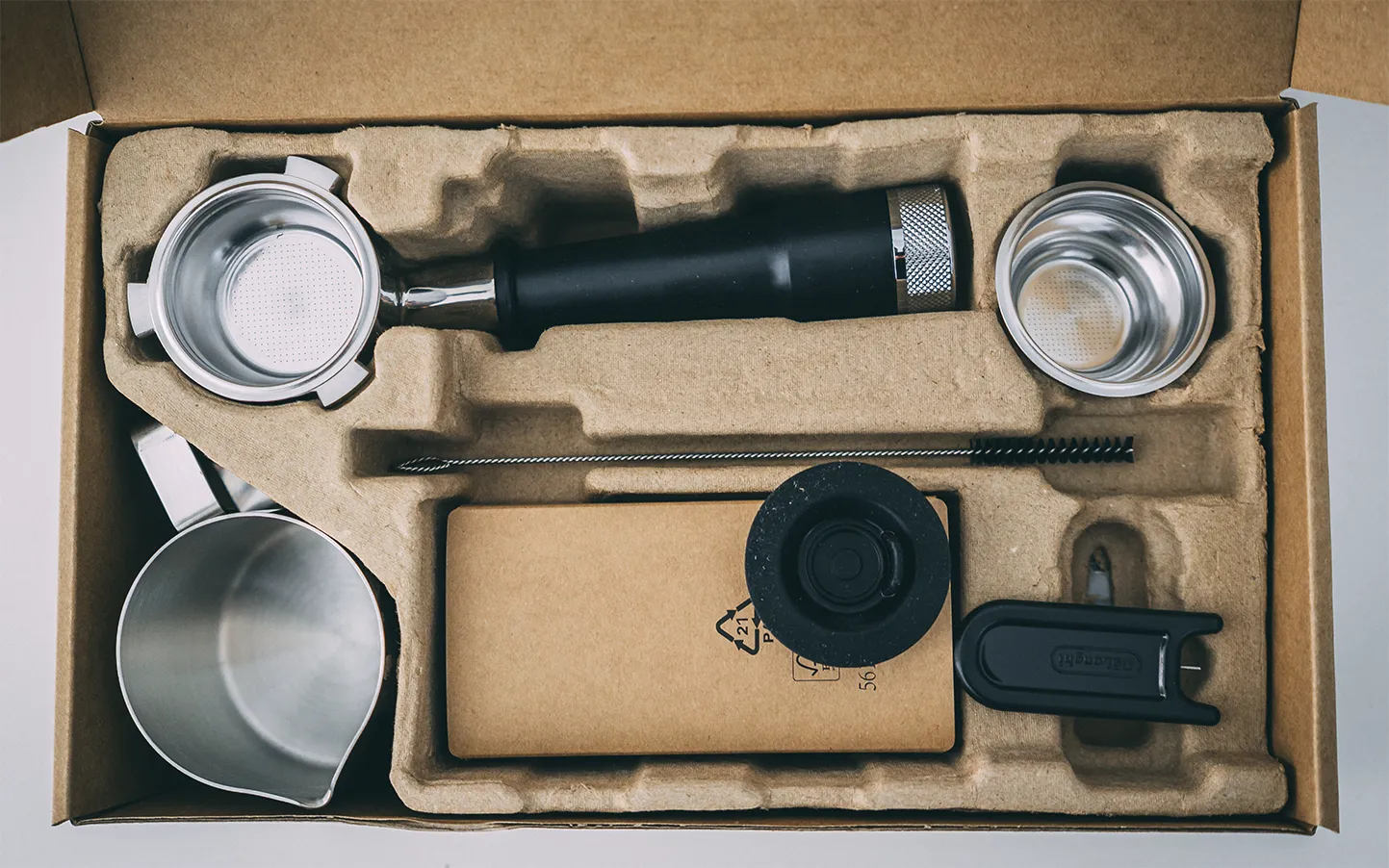
But what about the accessories that come with the machine? In another small box we find everything included: the portafilter, a set of two single-wall filter baskets, another set of two pressurized filter baskets, the milk pitcher, and cleaning tools. One of these is the blind filter basket, a clear sign that the Specialista Opera has a three-way solenoid valve to release pressure from the group head, draining water into the drip tray.
Overall, I found the design of the De’Longhi Specialista Opera to be very good. It’s fairly similar to what this line has always been, but the quality of materials, solidity, and sense of durability that this particular model offers are unmatched by previous models. It’s an espresso machine with a high-end price tag, and the design lives up to it.
Control Panel, Workflow
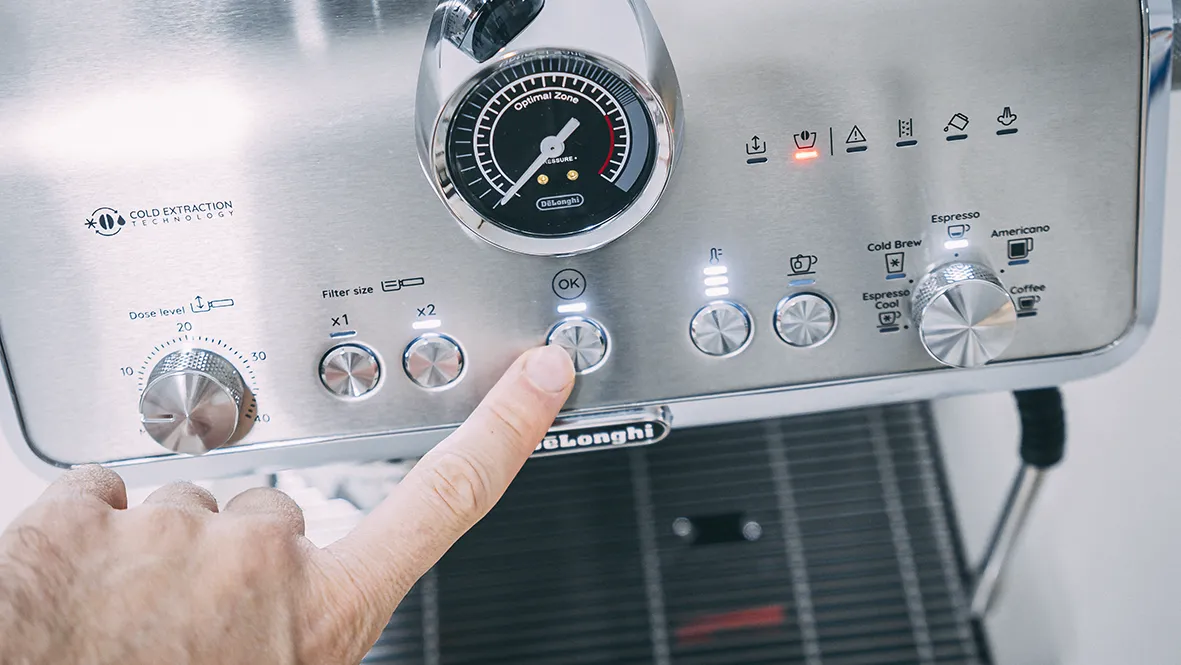
That design continuity from previous models can also be seen in the control panel, which is practically identical to the Specialista Arte and Arte Evo. Starting from left to right, we have the dose adjustment dial, then the filter size buttons, and in the center the OK button that starts and stops the extraction.
Further to the right is the temperature adjustment button with three levels, a dedicated button for hot water (here’s one of the differences from the Specialista Arte’s panel), and on the far right, the dial for selecting programmed recipes—in this case espresso, cold brew, cold espresso, americano, and long coffee. At the top is the pressure gauge, and to its right, status and maintenance indicator lights.
The Specialista Opera is ready to pull espresso shots very quickly after turning it on. De’Longhi uses a Thermoblock that—I suspect—must be a ThermoCoil type, because it heats up in barely 20 seconds. The upside is that the machine, as I mentioned, heats up very fast; the downside is that the group head doesn’t, so there’s no point in leaving the portafilter locked in during preheating to equalize and stabilize the temperature for extraction.
That said, temperature stabilization is handled by a PID, but I’m getting ahead of myself. Let’s look at what the espresso-making process is like with this De’Longhi Specialista Opera. The process starts with adjusting the grind level. In my testing, I found that level 4-3 is usually appropriate for medium-dark roast coffee beans, with level 2 or 1 being necessary for light roasts.
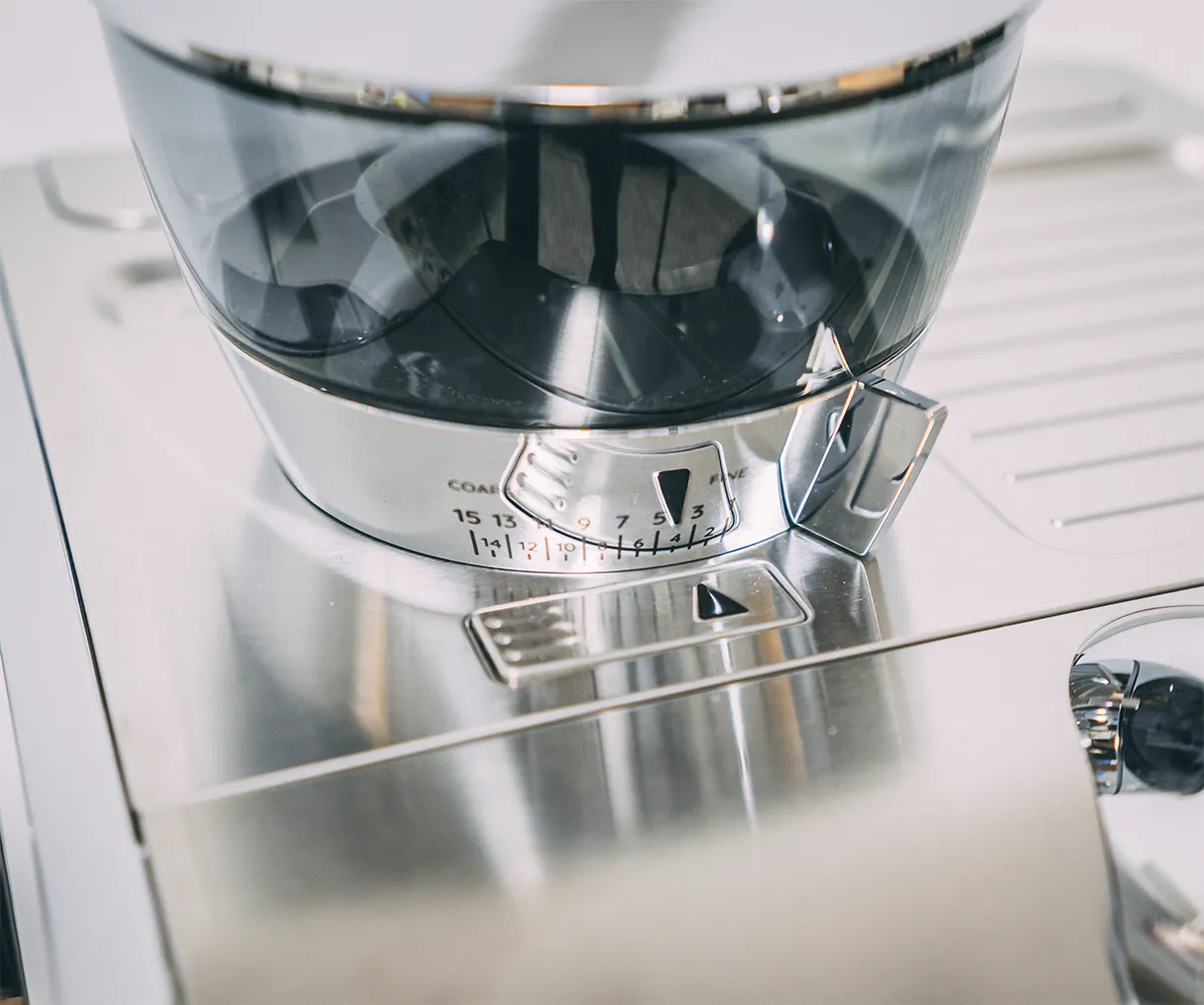
The good news is that I was able to confirm the De’Longhi Specialista Opera is perfectly capable of working with light roast beans: level 1 grinds fine enough for this type of roast, as long as it’s freshly roasted. The bad news is that there’s no room to go finer: the 15 settings available are all you get, and this grinder doesn’t have the fine, precise adjustment of dedicated espresso grinders or even of espresso machines with good integrated grinders, like in the Sage/Breville models.
But beyond grind size, you also need to dose. For this, the Specialista Opera has two adjustment elements on the control panel: the dose level dial and the filter size buttons. The dial regulates the total amount of coffee the machine will grind for one cycle, while the filter buttons (1 or 2 cups) indicate whether you’re using the single or double basket. When you select the basket size, the machine automatically adapts the grind volume to the available space, and with the dial you can fine-tune the dose within that range to reach the optimal amount.
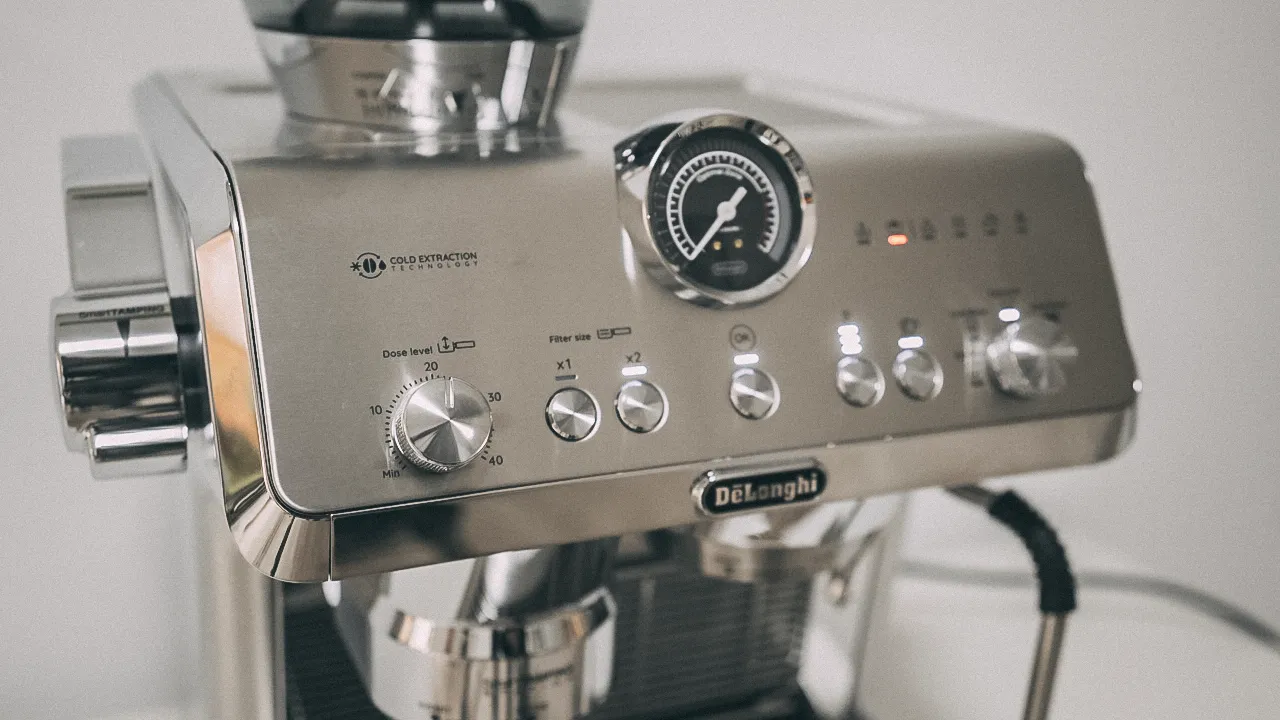
So to dose correctly, you first place whichever basket you’re going to use in the portafilter and select the corresponding button (1 or 2 cups). Then you adjust the dose dial to a setting that fills the basket up to the interior marking (“perfect dose”): if it falls short, you increase the dial a bit; if it overfills, you reduce it. Once you find the point where the dose fills the basket right up to that line, you’ve calibrated your perfect dose and can repeat it to make coffee consistently.
Additionally, this system has been improved in this model. In previous models like the Specialista Arte, the dose level dial was time-based, which meant several trial-and-error attempts to dose correctly. In the Opera, there are sensors (Sensor Grinding Technology) that adapt the settings based on the bean and its density. Far from being just a marketing gimmick, I noticed the dose was always quite close to the basket’s interior marking.
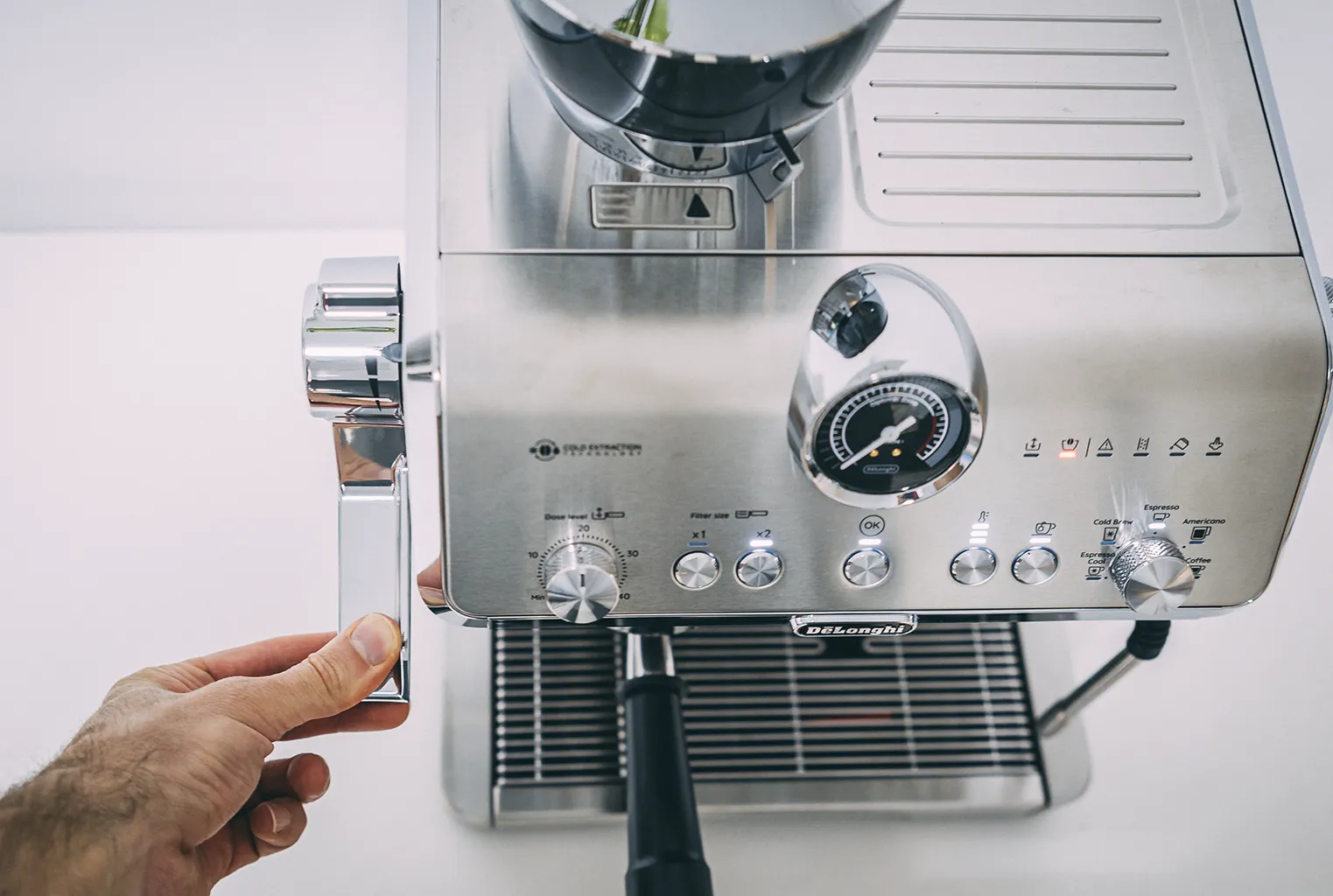
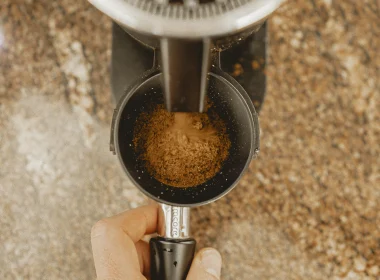
This “assistance” continues with the coffee tamping. The Smart Tamping system, with that lever on the left side of the machine, tamps the coffee puck in the portafilter quite well. It’s not a perfect tamp—as you can see in the next image—but it’s sufficient for the extraction to be quite even, without too many channeling issues.
I suspect the portafilter size helps with this: it’s well-known that a 51mm basket, like the one the Specialista Opera uses, tends to slightly reduce the risk of channeling compared to wider baskets (Source, another here). This happens because coffee in a narrower basket forms a deeper bed, which causes the water to pass through the coffee more slowly and with more vertical pressure, reducing the possibility of flow being diverted through side channels or poorly tamped gaps.
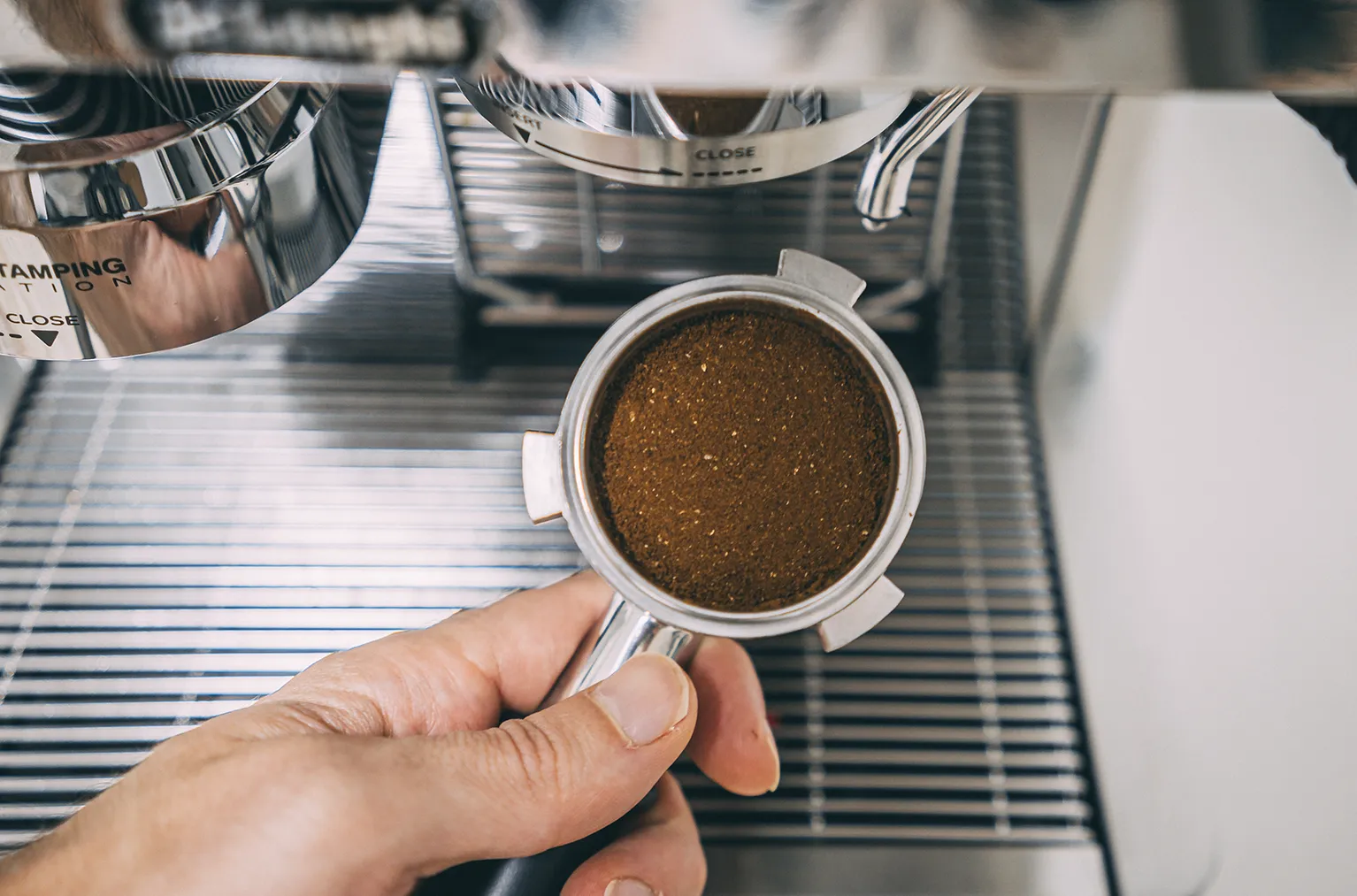
In any case, for an assisted tamping system, the result is quite good. Additionally, coffee waste is reduced since all the ground coffee falls into the basket. It also makes purchasing a dosing funnel unnecessary—something that’s mandatory with other similar machines. My only complaint with this entire grinding, dosing, and tamping process is that you can’t grind if the portafilter isn’t locked into the grinder output. That’s the downside of having so many sensors in the machine.
Speaking of sensors, there’s another one in the coffee bean hopper that detects when the hopper is empty and alerts you with the coffee bean icon indicator light. Fortunately, this sensor doesn’t prevent grinding even when there are few beans in the hopper, which in practice allows you to use the grinder in a single-dose manner, if you prefer.
Espresso, Coffee, Cold Brew
The ease of dosing and tamping, along with the grinder’s good performance with a fine grind suitable for espresso, allow for proper coffee extraction. Additionally, the Specialista Opera has a very convenient temperature adjustment, with a button that lets you choose from three temperature levels. The manual doesn’t specify the exact temperature for each level, but it’s safe to assume the range is between 90°C and 96°C (194°F to 205°F).
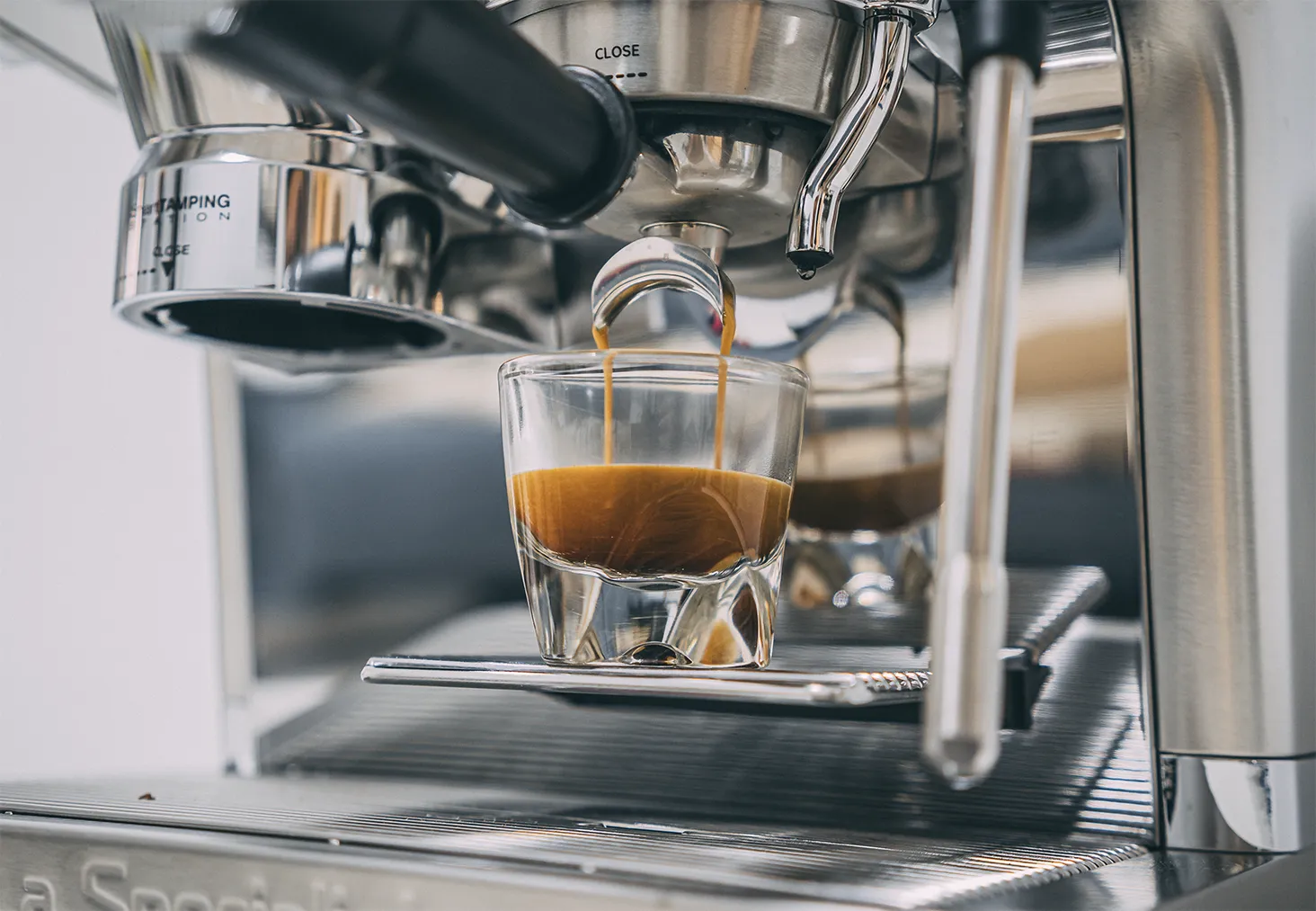
The machine uses a PID to stabilize temperature and seems to deliver good results. Using light roast coffees, the maximum temperature setting successfully extracted this type of coffee, which requires a temperature around 95-96°C (203-205°F), while with medium-dark roast coffees, the medium temperature setting was sufficient.
What has surprised me most about this Specialista Opera is the pre-infusion. De’Longhi advertises a dynamic pre-infusion system that automatically varies according to grind and dose. What I discovered in my testing is that the machine, once again, seems to use sensors to vary the duration and pressure of that pre-infusion based on the coffee puck’s density.

In practice, the system detects—I assume through flow and/or resistance to water passage—how much pressure it needs to apply to evenly wet all the coffee before starting the main extraction. As a result, when I used very fine grinds and high doses (denser puck), the pre-infusion was longer and the pressure gauge needle moved up to 1.5-2 bar.
This system also changes the extraction: by having a three-way valve, the De’Longhi Specialista Opera can transition from the pre-infusion phase to the extraction phase continuously and smoothly, without needing to pause. Previous models in the line would stop the flow to allow the coffee to soak before starting full extraction, but the Opera regulates pressure internally and releases the excess at the end, achieving a natural transition between low and high pressure.

In combination with its dynamic pre-infusion system, the three-way valve ensures even wetting and a gradual pressure ramp-up, reducing channeling and achieving more stable and consistent extractions. This system puts the Specialista Opera quite on par with the pre-infusion and extraction of Sage machines, although there doesn’t appear to be an OPV here that limits extraction to 9 bar, as is the case with Sage/Breville machines.
In any case, the extraction almost always stayed within the optimal range marked on the pressure gauge. As a result, the espresso shots I pulled with this machine were consistently great, full of body, flavor, and crema.
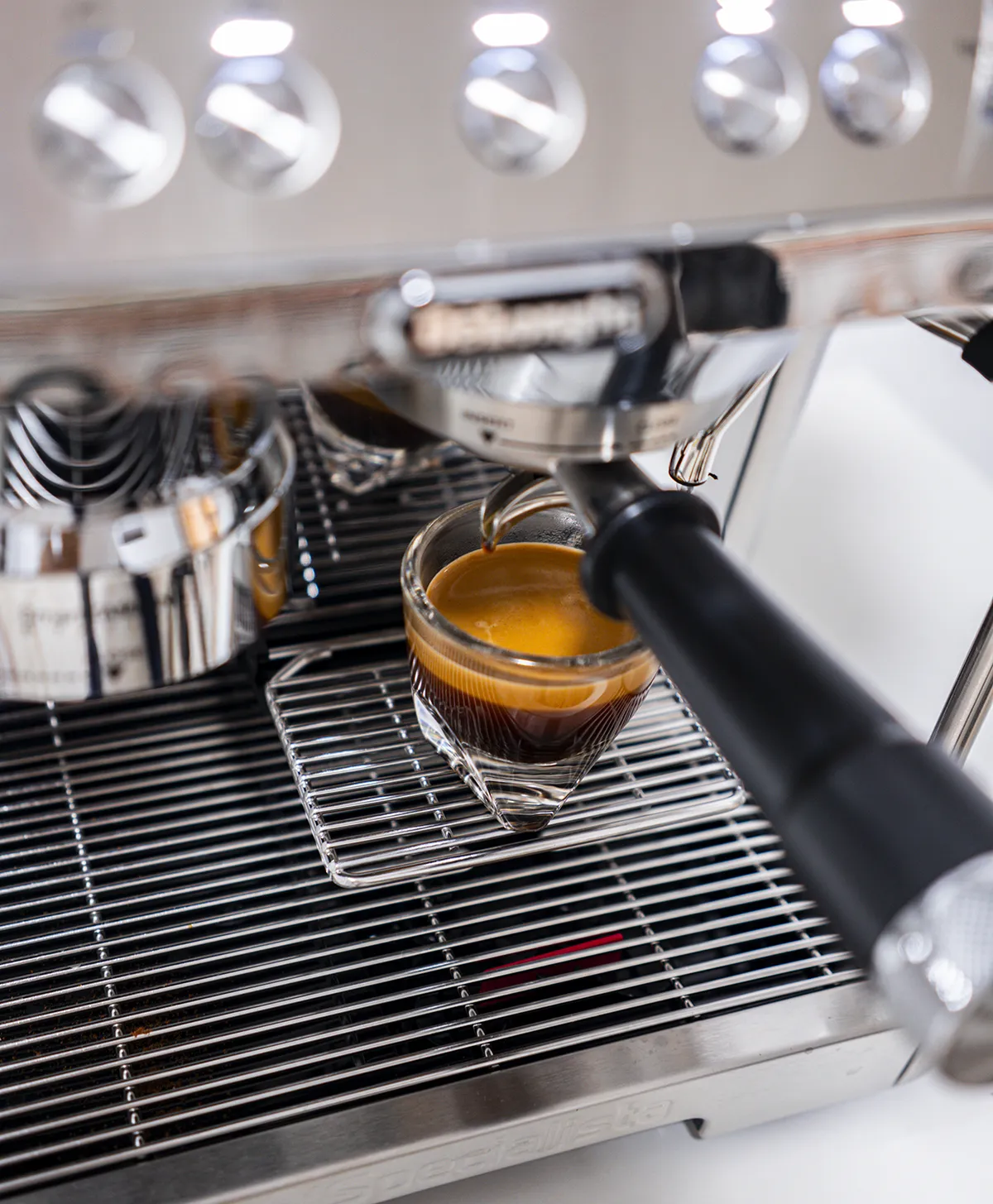
But beyond espresso, the Specialista Opera comes with programmed recipes for americano, long coffee, espresso cool, and cold brew. The americano and long coffee recipes are straightforward: for the americano, the machine brews 3/4 long coffee and then adds a 1/4 hot water through the hot water spout. Same for the long coffee, just without adding water afterward.
The cold espresso and cold brew recipes have more particularities. For espresso cool, De’Longhi indicates in the manual that you need to use the pressurized baskets because it uses a lower temperature and the pressure during extraction is lower. The machine performs an extraction similar to espresso, but at a lower temperature.
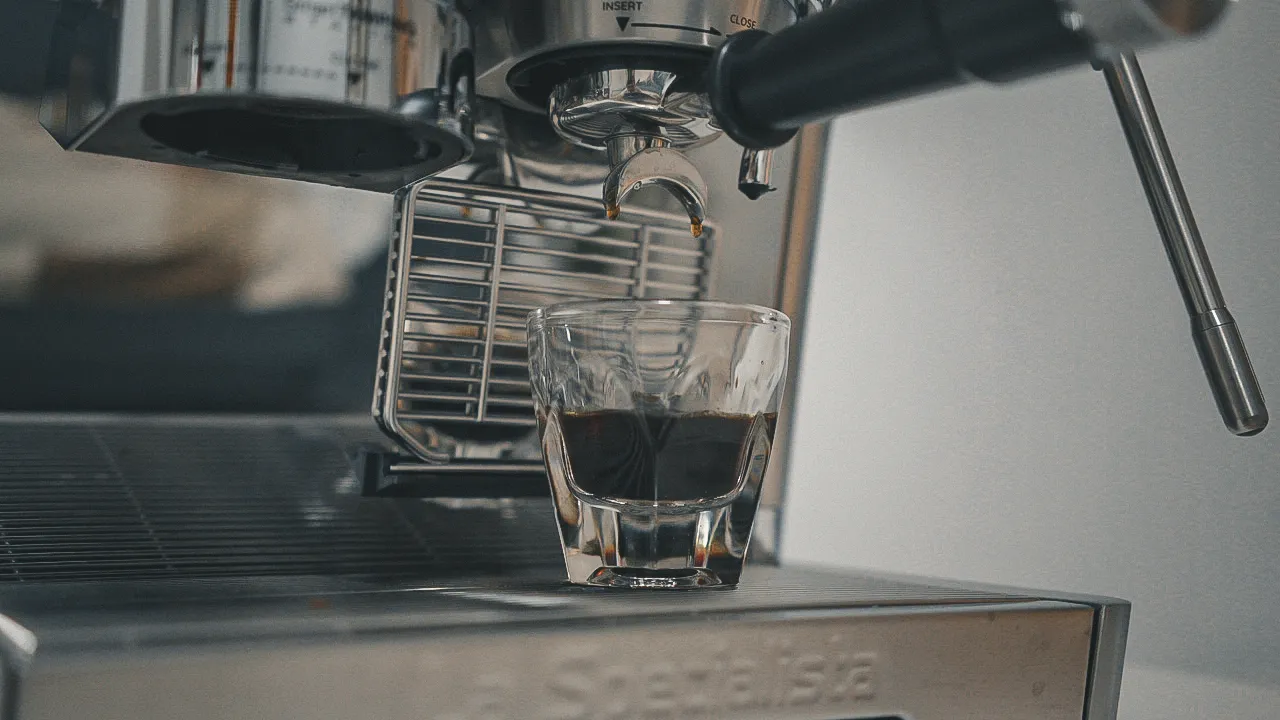
Cold brew is totally different. The machine performs a much longer extraction, about 5 minutes, extracting gradually at an even lower temperature of 30°C (86°F). It’s not cold brew in the strict sense, but it’s similar, tastes good, and does the trick. Both recipes, espresso cool and cold brew, change the OK button illumination to blue and disable the temperature button.
Steam Wand, Milk Texturing, Final Notes
The steam wand on the Specialista Opera is a single-hole tip lance, quite similar to the Specialista Arte’s. This time I encounter the same flaw: the limited vertical mobility of the steam wand forces you to position the pitcher awkwardly, not entirely suitable for placing the tip at an angle to the milk.

Even so, it’s possible to texture milk well to achieve a smooth, elastic texture suitable for latte art and silky modern cappuccinos with milk and coffee perfectly integrated. The steam wand isn’t overly powerful and takes a bit longer than other machines, but with patience and good technique it’s possible to get good results.
The steam wand stays cool to the touch and is easy to clean. The machine purges the internal steam circuit when you finish texturing, but it purges internally rather than through the wand, so it’s advisable to release some steam when you’re done to clean the tip.
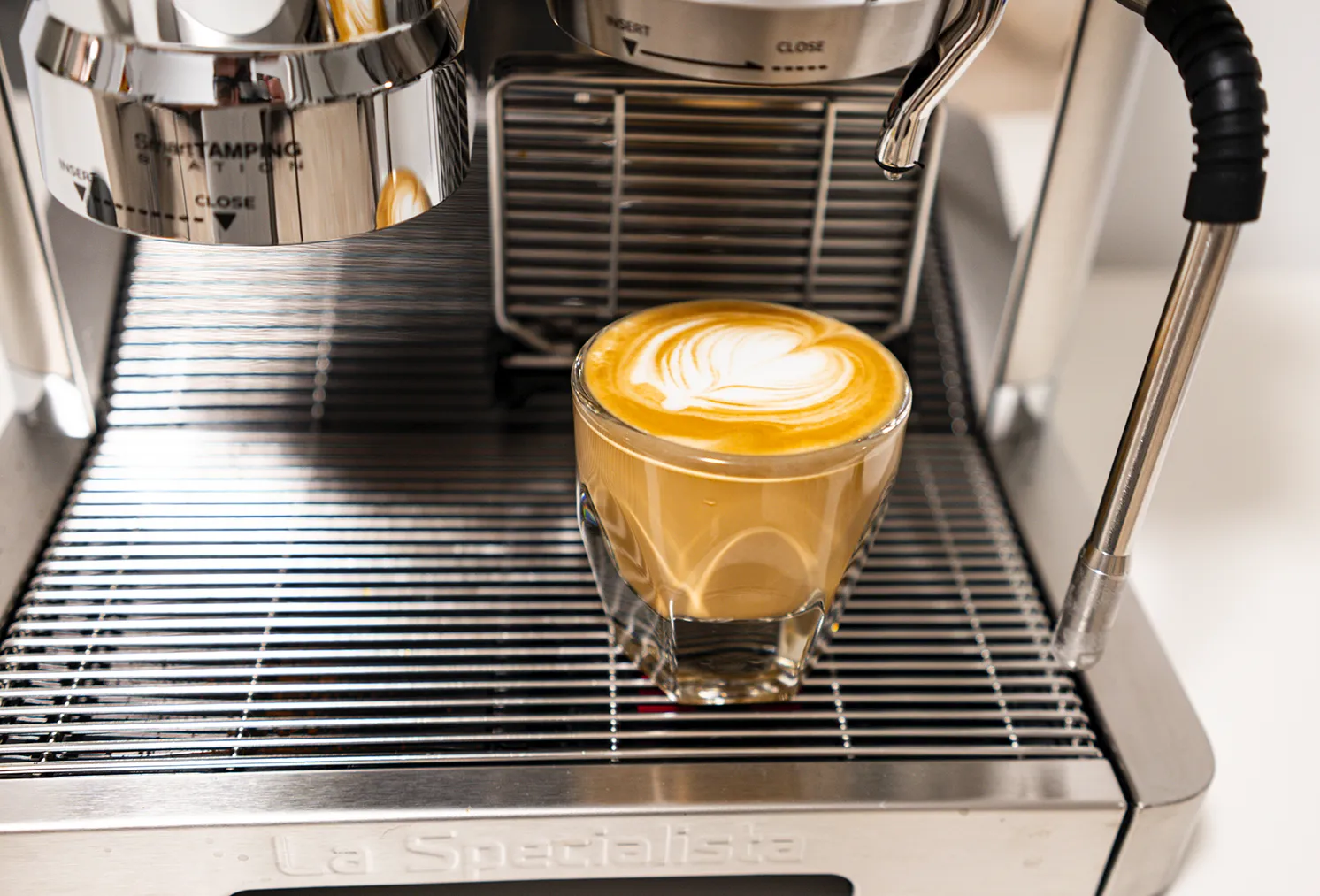
On the other hand, it’s not as necessary to purge at the start as is usually required to clear water from the circuit until steam comes out—it seems the Opera’s advanced Thermoblock preheats and pressurizes the steam circuit so the machine is ready to steam without needing a prior purge.
There are other aspects of the machine I won’t go into much detail about, since I’ve only had it at home for a few days and haven’t had a chance to fully test them. I’m referring to cleaning and maintenance issues. However, in this regard, it’s important to highlight that you can perform backflushing thanks to the three-way valve. For this you’ll use the blind basket and cleaning tablets that come with the accessories: that disk prevents water from passing through the basket, and the valve then drains the water and dissolved tablet to the drip tray, cleaning the coffee circuit.
Of course, there’s also a descaling program, and a small bottle of descaling solution comes with the accessories for your first descaling. You can purchase replacements for the cleaning tablets, the descaling liquid bottle, and also the softballs—small pouches with anti-scale and water-softening spheres that let you use tap water while maintaining good coffee flavor.
There’s another matter I’d like to mention, and that’s that the non-pressurized baskets that come with this Specialista Opera work fine, but could be better: baskets like the IMS or the one included with Normcore’s 51mm bottomless portafilter are considerably better. However, I haven’t been able to test them personally, and I’m left wondering how they’ll work with this machine; on one hand, whether they’ll affect proper dosing through the sensors the machine uses for this purpose, and on the other, these are baskets (especially the IMS) that require grinding slightly finer than the stock baskets, but as I mentioned, there isn’t much more room for that in the grinder. If you’re an Opera user and have tried them, please share your experience in the comments.
Alternatives and Verdict
There are increasingly more all-in-one barista machines with integrated grinders on the market, and the Specialista Opera is a very strong contender. What other machines does it compete against? For example, compared to one of the most popular, the Sage/Breville Barista Express, this Specialista Opera offers more convenience and ease for preparing not just espresso but other types of coffee; however, it has fewer grind settings and less “control” overall.
This already gives us some insight into the type of user De’Longhi had in mind: someone looking to make coffee and espresso with considerable control over brewing parameters, but with a bit more convenience and cleanliness. In this regard, the assisted dosing and tamping largely solve what is usually the main headache with this type of machine: proper preparation of the coffee puck.
For this reason, it might be more appropriate to compare it against other machines with this type of assisted tamping and similar price point: the Barista Express Impress or the Ninja Luxe Pro. In the coming weeks I’ll be publishing a comparison between these machines to see which one is best.
My final opinion
My final opinionPros
- Spectacular design, solid and durable—maybe even too much so: it weighs a ton.
- Three-way valve with a pre-infusion system that's greatly improved over previous models.
- Smart Tamping is intuitive and works quite well.
- Sensor-based dosing also works surprisingly well.
- Fine grind at lower settings, suitable for light roasts.
- Steam wand perfectly capable of creating silky, velvety textured milk.
Cons
- Bean hopper isn't removable for grinder cleaning. I think this is one of the weak points of these machines, and it's something that would cost De'Longhi absolutely nothing to fix.
- The steam wand lacks mobility, especially vertical.
- The accessory box includes a quick start guide but no trace of the instruction manual. I don't think it's acceptable to start omitting the instruction manual when you've spent this much money on a machine.
- There's no way to check the water level in the tank, and the machine has had to alert me several times that it ran out of water mid-extraction.


Nice review 🙂 Opera is my favorite machine! I’d just like to correct your explanation of americano, it’s not long coffee and hot water, it’s espresso and then hot water, by default set to 35 ml of espresso and 85 ml of hot water
I’ve had mine for a week. As of this morning it’s not working at all. I turned on the switch and the lights all flash for 2-3 seconds and then go off. Nothing works. I spent too much money on a machine that won’t work