The first step for anyone looking to improve their espresso is usually making the leap from a pressurized basket to a non-pressurized one. If you’re at this stage, you might be wondering whether the difference is really that significant, or whether it’s worth the trouble.
The answer is a resounding yes. A non-pressurized basket produces a noticeably better espresso: more intense, fuller-bodied, with a natural crema. It’s the single most impactful step you can take toward better espressos — even more so than buying a new machine — though it does require having a grinder capable of a proper espresso grind.
Differences Between a Pressurized and a Non-Pressurized Basket
So what exactly is the difference between a pressurized basket and an unpressurized one? Take a look at the image:
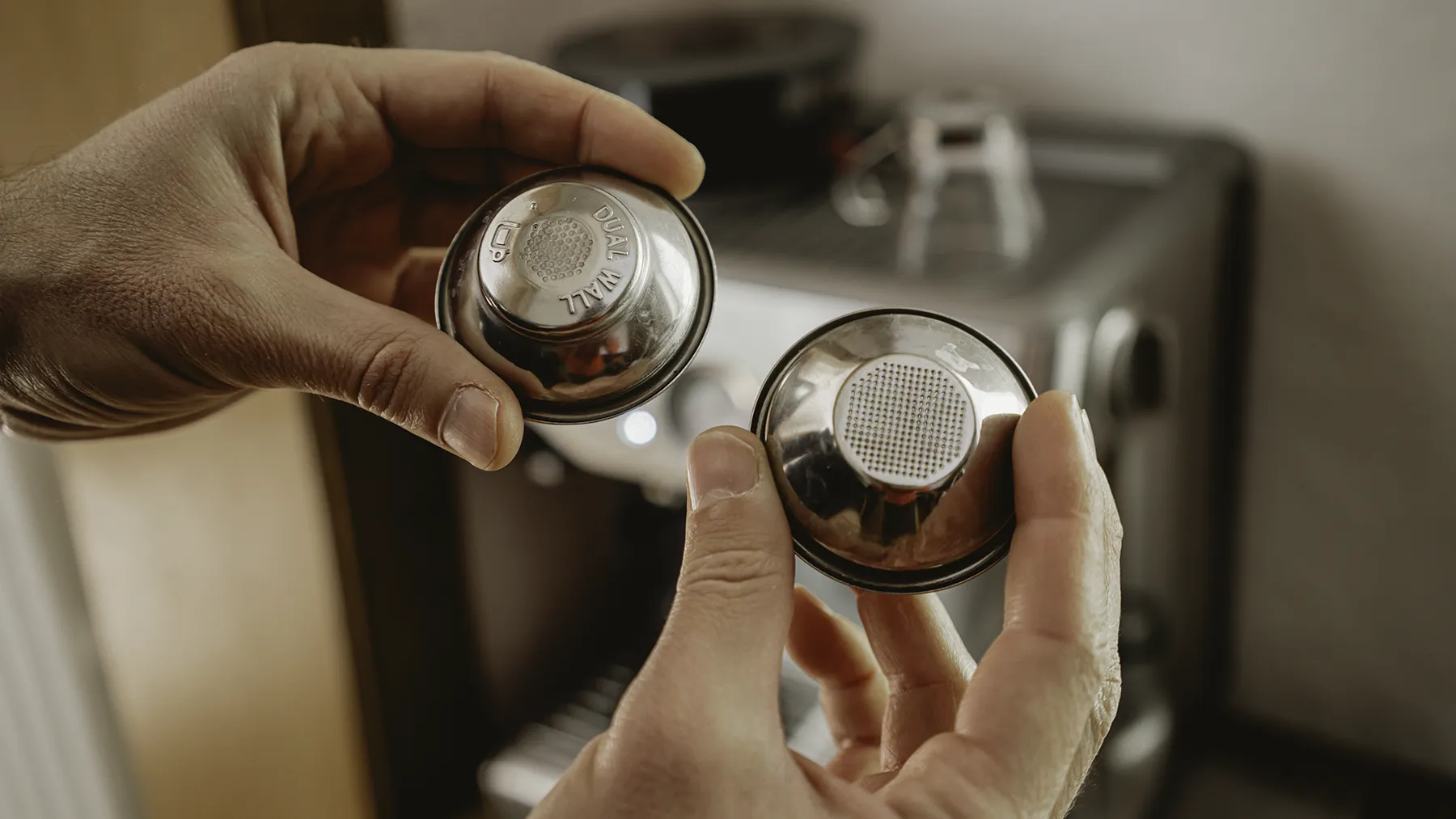
As you can see, the pressurized basket has a single outlet hole at its base, while the non-pressurized basket has many. That is the key difference: the pressurized basket creates resistance by restricting water flow through a tiny hole, whereas in the non-pressurized basket the water can flow more freely.
In a pressurized basket, high pressure builds up by forcing water through that single outlet, while with a non-pressurized basket, we have to generate the resistance needed to build pressure during extraction. The way to achieve this is through a very fine grind: finely ground coffee, properly dosed and tamped into a firm puck, offers significant resistance to water flow — which causes the pump to build pressure during extraction, and that is what drives proper coffee extraction.
Pressurized baskets were designed so that anyone could pull a decent espresso without needing high-end equipment or refined technique. And the reality is that most home espresso drinkers buy supermarket ground coffee, which tends to be coarsely ground and, in many cases, has been sitting on a shelf for months since it was roasted — coffee that has lost all its freshness.
But the main culprit is the grind size. Even if supermarket coffee looks fine, it isn’t — not by espresso standards. For a proper espresso, the grind needs to be extremely fine: not sandy, but almost powdery. Commercial ground coffee is typically milled to a medium grind so it can work across different brew methods (espresso, moka pot, drip), but it falls well short of what espresso actually demands.
If you use this kind of coffee in a non-pressurized basket, the result will be a disaster: thin, under-extracted, flavorless, and utterly watery. With a pressurized basket you can get something passable, but it will never come close to the intensity and flavor you can achieve with a non-pressurized basket and a proper espresso grind.
The Greatest Advantage of the Non-Pressurized Basket: Better Espresso
Without a doubt, the greatest advantage of the pressurized basket is its forgiving nature: it masks preparation errors, allowing anyone to pull a decent cup regardless of their skill level, the supermarket coffee they’re using, or even if they ground it with a low-quality grinder — a blade grinder, for instance.
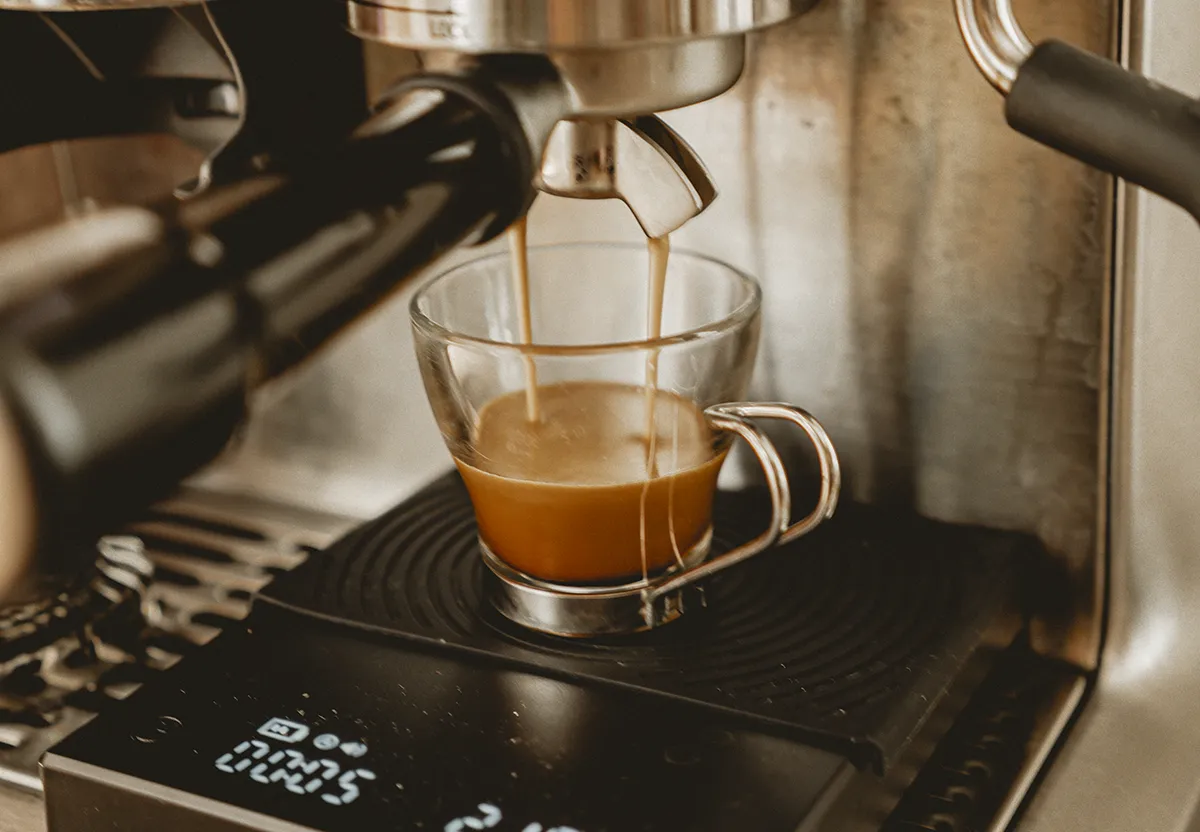
However, a pressurized basket will never reach the quality — in terms of intensity, aroma, and crema — that a non-pressurized basket can achieve when used properly. The non-pressurized basket is very sensitive to preparation errors: incorrect dosing or tamping, or using coffee ground coarser than needed, will almost certainly result in an under-extracted espresso.
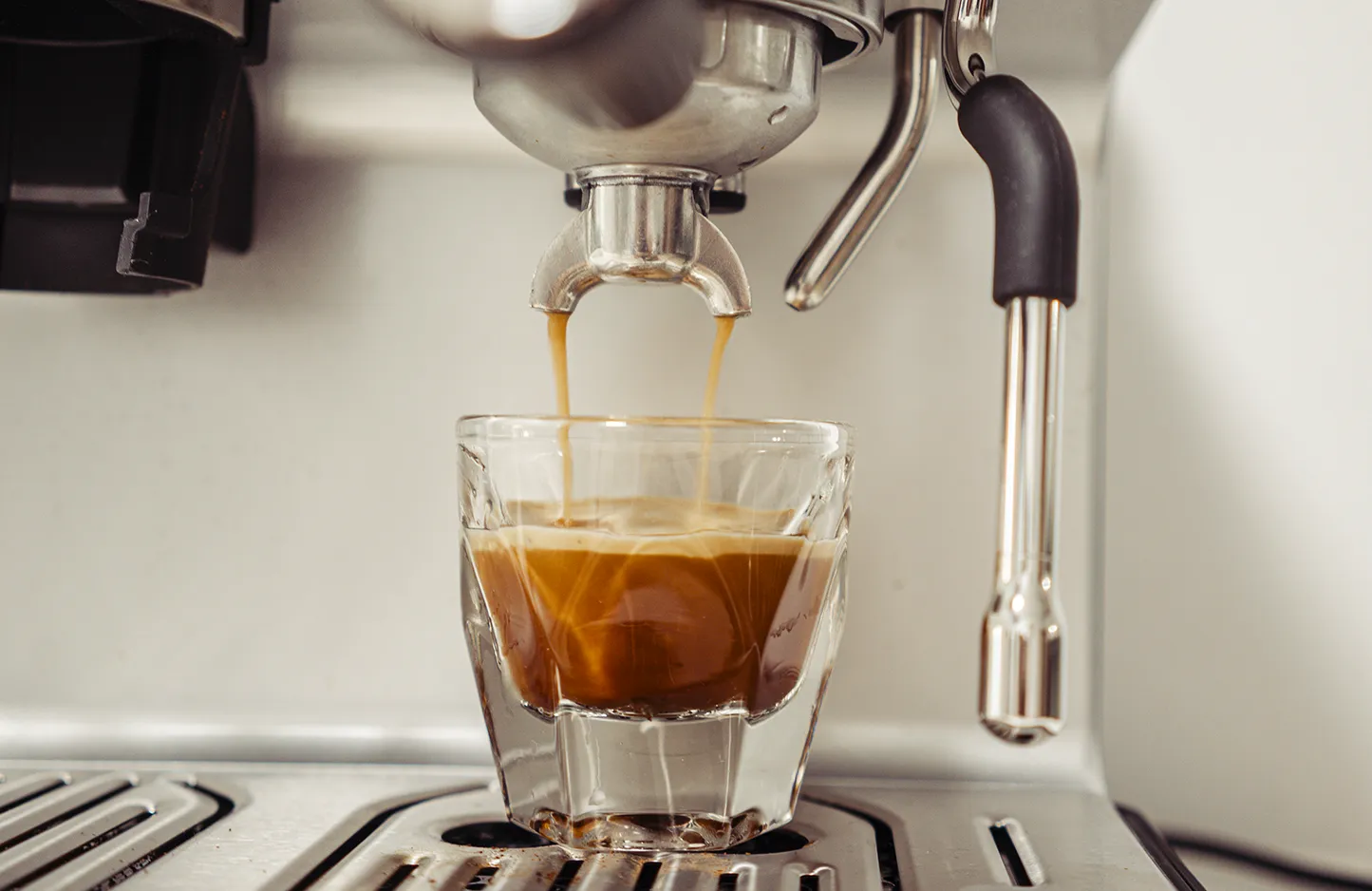
I’ve occasionally come across people claiming they got a thicker layer of crema with a pressurized basket — but this isn’t really true. What a pressurized basket produces is foam, not crema. The artificially forced pressure emulsifies the coffee oils and traps air bubbles in the drink, creating the appearance of greater density and volume, but this doesn’t translate into better flavor — or into real crema.
When to Use a Pressurized Basket and When to Use a Non-Pressurized One
In short, a pressurized basket makes sense if you’re new to espresso, if you’re using supermarket ground coffee because you don’t yet have a decent grinder at home, or if you only pull the occasional shot and aren’t particularly focused on quality.
A non-pressurized basket, on the other hand, is the right choice if you have a capable grinder, are genuinely passionate about coffee, and want to get the best possible result from every shot. Here’s a quick summary of everything covered so far:
| Pressurized filter | Non-pressurized filter | |
| Needs precise technique |  No No |  Yes Yes |
| Suitable for commercial ground coffee | Yes | No (ideal with freshly ground coffee) |
| Creates crema even if the coffee is not fresh | Yes (but “artificial”) | No |
| Quality of the crema | Less authentic, more foam | Real, with more aroma and flavor |
| Recommended for | Beginners, convenience | Baristas, espresso enthusiasts |