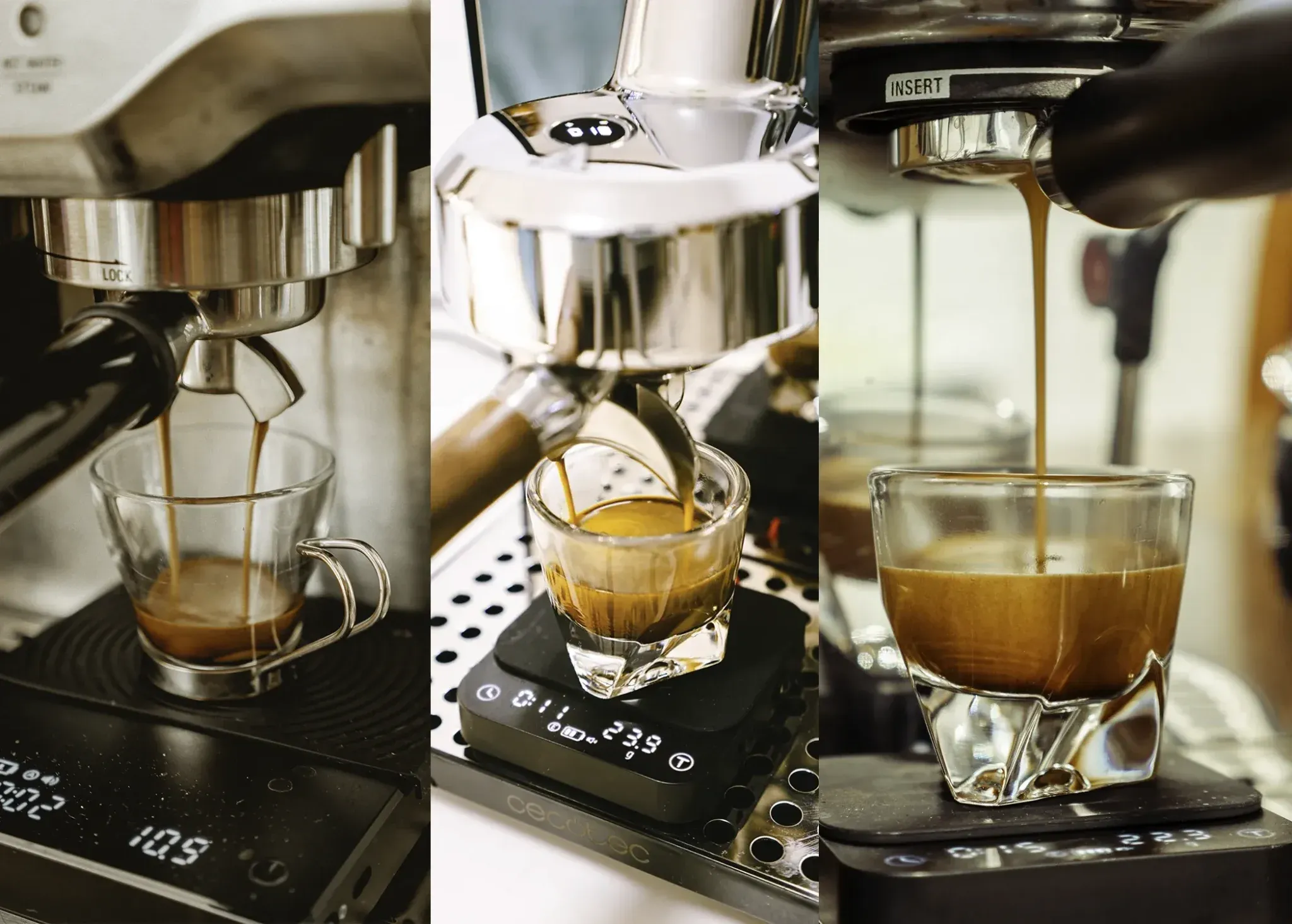
I’ve been testing and reviewing coffee machines for seven years now — which is exactly how long I’ve been running this blog. Over that time, I’ve come across all kinds of machines: some fantastic, some disappointing, and some I had zero expectations for that ended up being a pleasant surprise.
In this article, I’m sharing the 7 models that have impressed me the most out of everything I’ve tested. Some of the machines I’ll be covering have a built-in grinder, and others don’t. I explain in a separate article why using a standalone grinder tends to deliver better results — but there’s no denying the convenience of having everything in one machine, and espresso machines with integrated grinders are undeniably growing in popularity. So in this article, you’ll find both.
Sage/Breville Bambino Plus
The tiny Sage/Breville coffee machine is possibly the best home espresso machine if we’re talking about espresso machines without an integrated grinder and with a (still) reasonable price. It’s clear that there are even better home espresso machines (The Gaggia Classic, Rancilio Silva, or Profitec, for example) but these are models over $1,000, while the Bambino Plus costs around $500.

the Bambino Plus
Power: 1600 W | Pump: 15 bars | Heating system: ThermoJet | Portafilter and filters: 54 mm, pressurized and non-pressurized | Control panel: Analogue | Dosing: Automatic / Manual | Pressure gauge | Steam wand: 4-hole, manual or automatic | Water tank: 1.9 litres | Dimensions: 19.5 x 32 x 31 cm | Weight: 6.6 kg
What makes the Bambino Plus stand out? Its extraction system and ThermoJet technology. No other machine at this price can perform a pre-infusion at 3 bars followed by an extraction capped at 9 bars (I cover why this matters in a separate article). On top of that, the ThermoJet technology — a type of ThermoCoil patented by Sage, and even faster than the original — offers a key advantage that goes beyond the marketing claim of heating up in just 3 seconds: it enables an almost instant transition between brewing and steaming, something simply not possible on machines without a dual Thermoblock.
Add to that a three-way valve and PID temperature control — though the latter isn’t user-adjustable, which is the machine’s biggest drawback. The drip tray is another weak point: it’s notably small and narrow. That said, neither issue significantly impacts the overall picture of a machine capable of producing an absolutely incredible espresso, shot after shot, with remarkable consistency.
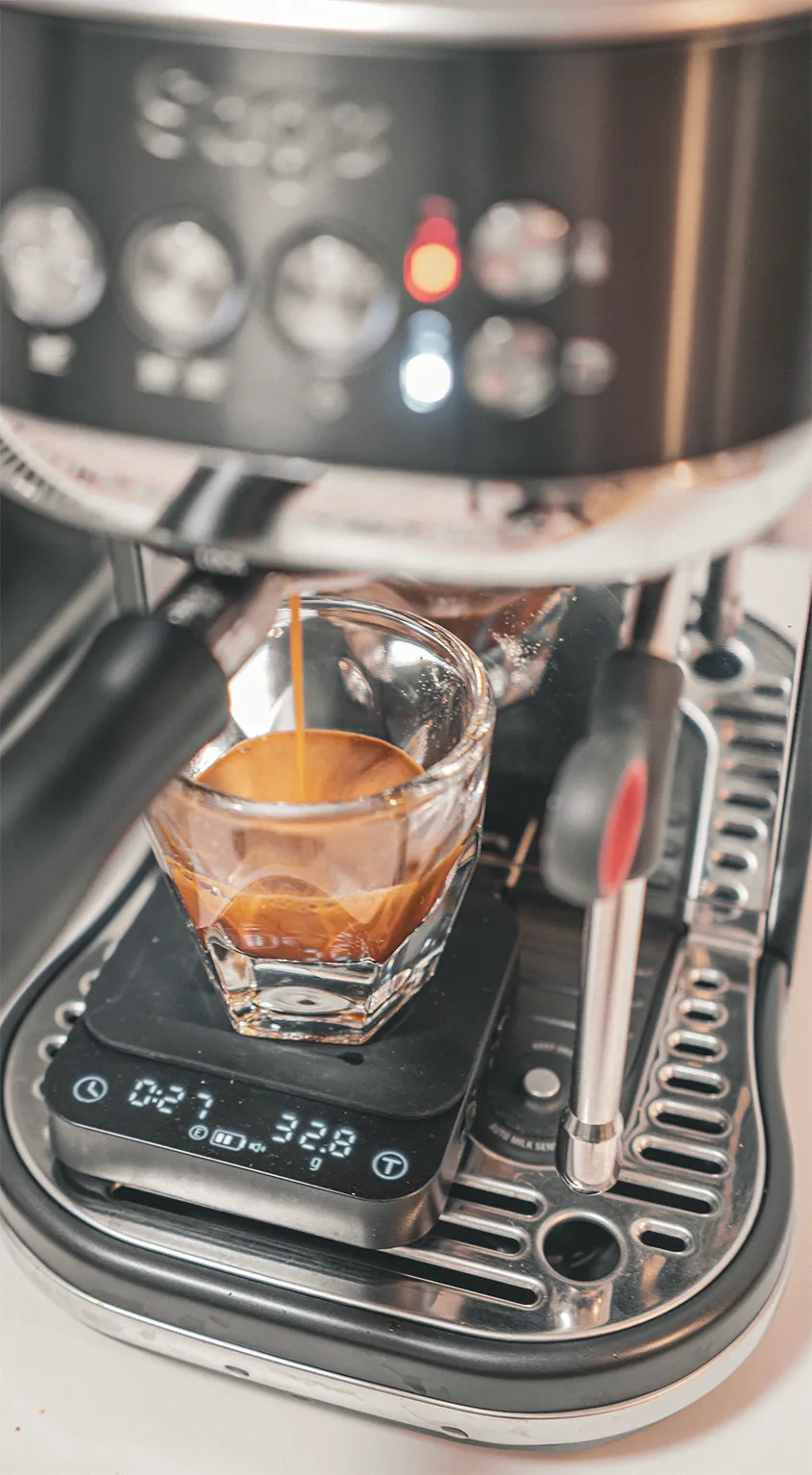
To top it all off, the Bambino Plus features a steam wand that works in both automatic and manual modes. In manual mode, it textures milk with plenty of power, delivering that elastic, silky microfoam ideal for latte art. The automatic mode, meanwhile, produces a surprisingly good texture for an automated frother — and with two adjustable settings for temperature and foam level, you can fine-tune the result to your liking.
It’s worth acknowledging that this isn’t a particularly cheap machine — especially given that it doesn’t include a built-in grinder. But as a standalone pump machine to pair with a separate grinder, nothing else at this price comes close.
That said, if the budget doesn’t quite stretch, a solid alternative is the smaller Bambino, which costs roughly half the price. The differences? The Bambino lacks the three-way valve and automatic steam wand, but it still extracts at 9 bars — and the absence of the three-way valve actually brings one unexpected perk: the ability to do blooming, which is particularly useful with light roasts.
Gemilai Owl
The Gemilai Owl is a solid alternative to the Bambino Plus — not quite as accomplished overall, but more affordable, capable of pulling a great espresso, and with a few genuine strengths of its own.

Gemilai Owl
Power: 1850 W | Pump: 15 bars | Heating system: Thermoblock | Portafilter and filters: 58 mm, non-pressurized | Control panel: Analogue | Dosing: Automatic / Manual | Pressure gauge | Pre-infusion control | PID | Temperature adjustment: 80 – 102 °C | Steam wand: 2-hole | Water tank: 1.7 litres | Independent hot water outlet: No | Dimensions: 37.0 x 24.7 x 35.7 cm | Weight: 7.8 kg
This machine is a Chinese rebrand — one of those products manufactured in China and distributed worldwide under different names and labels. The version I reviewed in Spain was the Baristeo Intima by Cecotec, but it’s also sold in other European countries as the AVX EM1 Lux, and in Asian markets and the US as the Gemilai Owl.
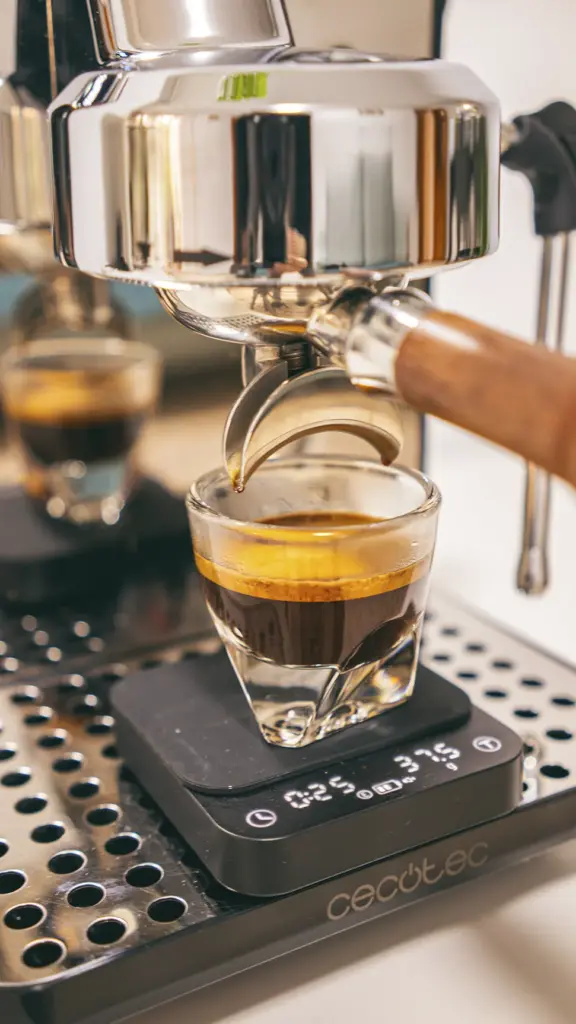
Being a Chinese rebrand, you might reasonably have some doubts about build quality — but the Gemilai Owl genuinely exceeds expectations with very solid components: a 58mm group head and portafilter, a PID for temperature stability, an exceptionally powerful steam wand, and even a three-way valve.
It even pulls ahead of the Bambino Plus in a few areas: extraction temperature is adjustable between 80°C and 102°C, the 58mm portafilter is a pleasure to work with, the drip tray is significantly larger and wider, and the steam wand is among the most powerful at this price point — capable of achieving a perfectly textured milk in under 30 seconds.
For me, the main drawback is that the machine extracts at 12 to 13 bars out of the box, rather than the 9-bar maximum you get with the Bambino Plus. That said, during my testing I did open the machine and adjusted the internal OPV down to 9 bars — and the difference was significant, turning a good machine into a great one. This does void the manufacturer’s warranty, so I’d only recommend it if you’re comfortable experimenting and willing to give up that coverage. If not, the Gemilai Owl is still a very capable machine regardless.
Sage Barista Express, Barista Express Impress, and Barista Pro
Today, there’s no shortage of espresso machines with integrated grinders—but that wasn’t always the case. The brand that popularized this category and experienced tremendous growth over the past five years is Sage—or Breville, depending on your region—which was the first to truly commit to this type of machine.

the Barista Express
Power: 1850 W | Pump: 15 bars | Heating system: Thermocoil with PID temperature control | Grinder: Conical, 16 grind settings | Display: Analogue | Bean hopper capacity: 250 g | Water tank: 2 L | Programmed recipes: 1 and 2 cups, with customizable volume | Steam wand type: Manual, professional steam wand | Maximum cup height: 135 mm | Independent hot water outlet: Yes |Dimensions: 318 x 351 x 404 mm | Weight: 10.6 kg
Sage launched the Barista Express over ten years ago, and it remains one of their best-sellers to this day. It’s also consistently one of the most recommended entry-level machines on specialty coffee forums and among espresso enthusiasts.
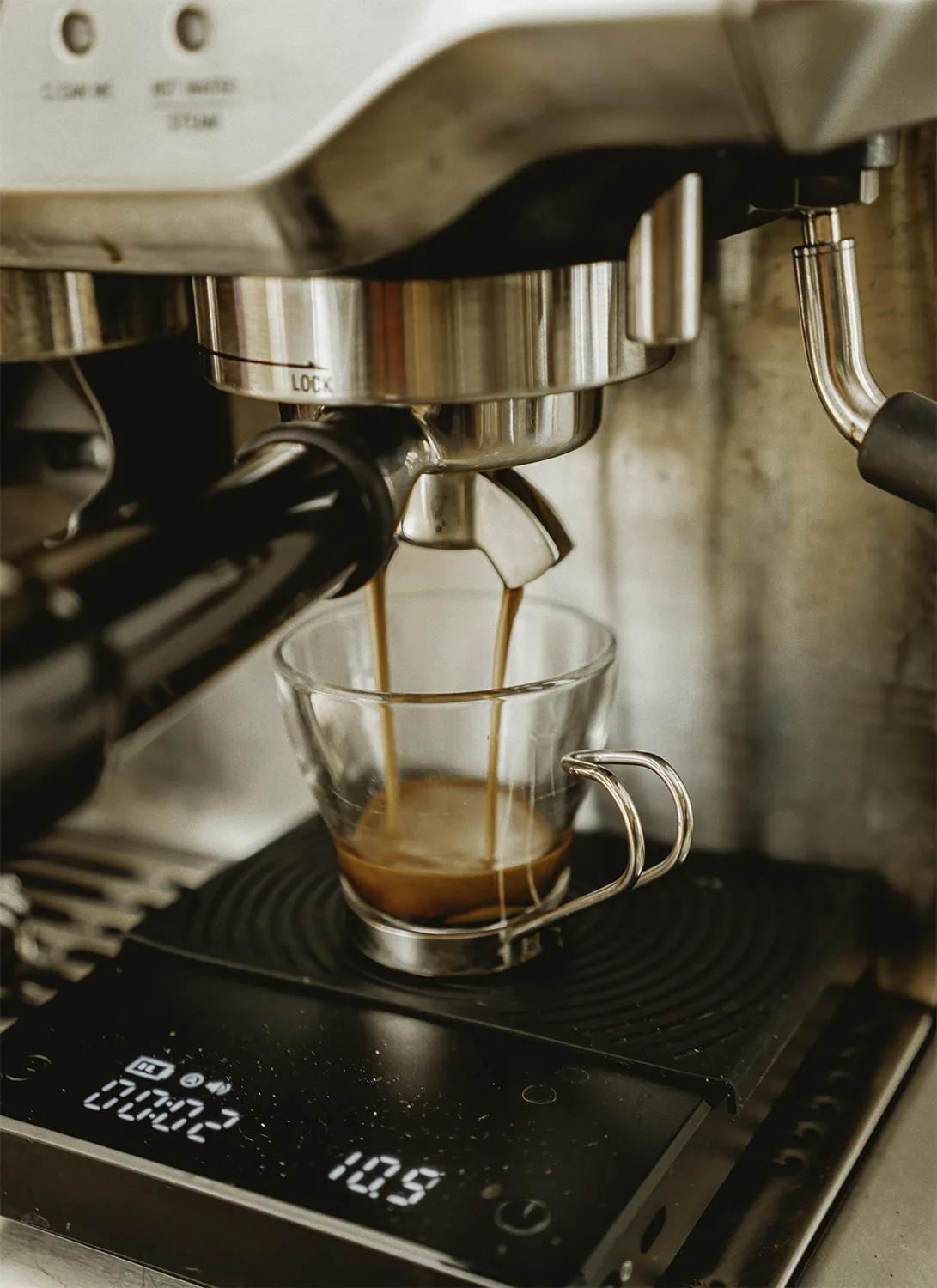
That reputation is well-earned. Most importantly: the Barista Express pulls an espresso that isn’t far off what you’d get from machines costing three times as much — which makes sense when you look at the specs: an adjustable PID (one advantage it has over the Bambino Plus), a three-way valve, and — since 2023 — an OPV tuned just like the Bambino, with pre-infusion at 3 bars and full extraction at 9 bars.
The machine’s most debated aspect is the grinder — and not because it’s bad. I go into more detail in my full Barista Express review, but the short version is this: calibrating the grinder each time you switch bean varieties can get tedious, since accessing the fine micro-adjustment settings requires removing the hopper and lifting out the upper burr.
The Barista Pro addresses this with a superior, easier-to-calibrate Baratza grinder. It also brings ThermoJet technology into the mix — like the Bambino Plus, it reaches brewing temperature in three seconds and allows you to switch to steaming almost immediately after pulling a shot. The control panel features an LCD screen that displays an extraction timer and simplifies adjusting parameters such as brewing temperature.

the Barista Pro
Power: 1680 W | Pump: 15 bars | Heating system: ThermoJet with PID temperature control | Grinder: Conical, 30 grind settings | Display: Digital LCD | Bean hopper capacity: 250 g | Water tank: 2 L (1.9 L) | Programmed recipes: 1 and 2 cups, with customizable volume | Steam wand type: Manual, professional steam wand | Independent hot water outlet: Yes | Dimensions: 354 x 406 x 417 mm | Weight: 9.07 kg
A later addition to the lineup, and one that’s proven very popular, is the Barista Express Impress, essentially a Barista Express with an assisted dosing and tamping system — a feature that’s become increasingly common across the market. The mechanism uses a semi-automatic tamper that applies a consistent 10kg of pressure with a 7° twist, replicating the technique of a trained barista and removing the learning curve of manual tamping. It also improves on the original Barista Express with 25 external grind settings, making calibration noticeably more straightforward.

the Barista Express Impress
Power: 1850 W (1600 W with coil heating element) | Pump: 15 bars | Heating system: Thermocoil with PID temperature control | Grinder: Conical, 25 grind settings | Display: Analogue | Bean hopper capacity: 250 g | Water tank: 2 L | Programmed recipes: 1 and 2 cups, with customizable volume | Steam wand type: Manual, professional steam wand (130°C) | Maximum cup height: 135 mm | Independent hot water outlet: Yes | Dimensions: 330 x 380 x 410 mm | Weight: 10.98 kg
Sage/Breville offers several other machines with integrated grinders, but the step up in price is hard to justify for most home users — and the advantages are debatable. With the Barista Express, Barista Express Impress, or Barista Pro, you can already produce truly great espressos without overspending. What those pricier models mainly add is greater automation and convenience: automatic milk frothers and modern full-color touchscreens — nice to have, but unlikely to improve what’s in the cup.
De’Longhi La Specialista Opera
De’Longhi’s answer to the three Sage machines covered above is the Specialista lineup, and the most recommended model in that range right now is the Specialista Opera.

De’Longhi La Specialista Opera
Power: 1850 W | Pump: 19 bars | Heating system: Thermoblock with PID temperature control | Grinder: Conical burr, 15 grind settings | Display: Analogue | Bean hopper capacity: 250 g | Water tank: 2 L | Programmed recipes: 1 and 2 cups, with customizable volume | Steam wand type: Manual, professional steam wand | Maximum cup height: 135 mm | Independent hot water outlet: Yes | Dimensions: 356 x 381 x 445 mm | Weight: 17.5 kg
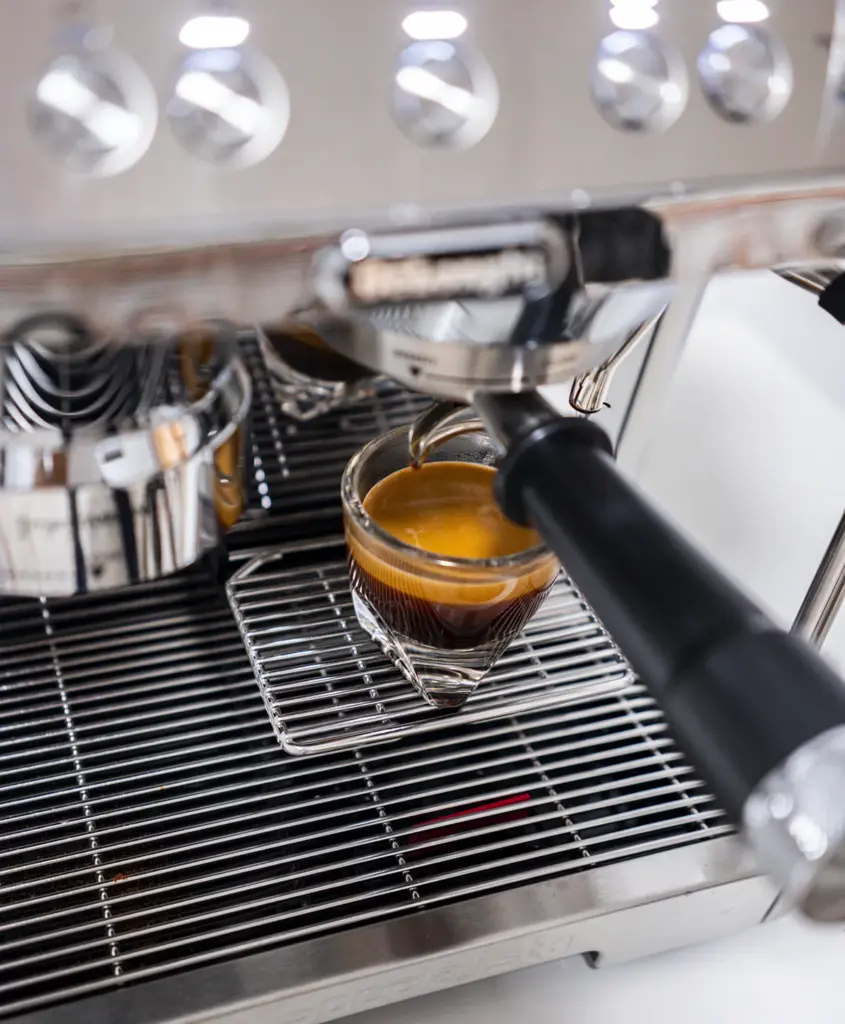
The Opera is an upgrade over the Specialista Arte, which had long been the family’s standout performer thanks to its strong price-to-quality ratio. The Opera commands a higher price, but it brings some genuinely worthwhile improvements: assisted tamping, a grinder with more grind settings, a three-way valve, and the ability to prepare cold brew.
I break down all the differences between the Opera and the rest of the Specialista range in a separate article. There I make a point that feels obvious once you look at the lineup and its current pricing: the two models worth recommending today are the Specialista Arte for value, and this Specialista Opera for those who want a fantastic espresso with relatively little effort.
And then there’s the design — which deserves a mention of its own. The Specialista Opera is built like a tank: exceptionally sturdy, yet somehow still refined and elegant. Of all the machines I’ve tested, it’s the best-looking one, which is no small thing at a time when brands are increasingly cutting corners on build quality and aesthetics.
De’Longhi Dedica Style
Like the Barista Express, De’Longhi’s Dedica lineup has been on the market for years — yet it remains as popular as ever. Leading the range is the Dedica Style, the best-selling model and one of the most popular espresso machines under $200, offering far more than its price tag might suggest.

De’Longhi Dedica Style
Power: 1850 W | Pump: 19 bars | Heating system: Thermoblock with PID temperature control | Grinder: Conical burr, 15 grind settings | Display: Analogue | Bean hopper capacity: 250 g | Water tank: 2 L | Programmed recipes: 1 and 2 cups, with customizable volume | Steam wand type: Manual, professional steam wand | Maximum cup height: 135 mm | Independent hot water outlet: Yes | Dimensions: 356 x 381 x 445 mm | Weight: 17.5 kg
It’s the simplest machine on this list — just three buttons: single shot, double shot, and steam — and that simplicity is precisely its strongest selling point. Fitted with pressurized filters, the Dedica is clearly designed for a general audience rather than experienced home baristas: with pressurized baskets you can use supermarket pre-ground coffee and still pull a perfectly decent espresso.
That said, it’s also a machine worth recommending to anyone looking to take their first steps as a home barista. There are non-pressurized filters fully compatible with the Dedica — such as the IMS basket or the Normcore bottomless portafilter — which, paired with a good espresso grinder, open the door to genuinely excellent espressos. (If none of that means anything to you yet, check out my post about the advantages of non-pressurized filters.)
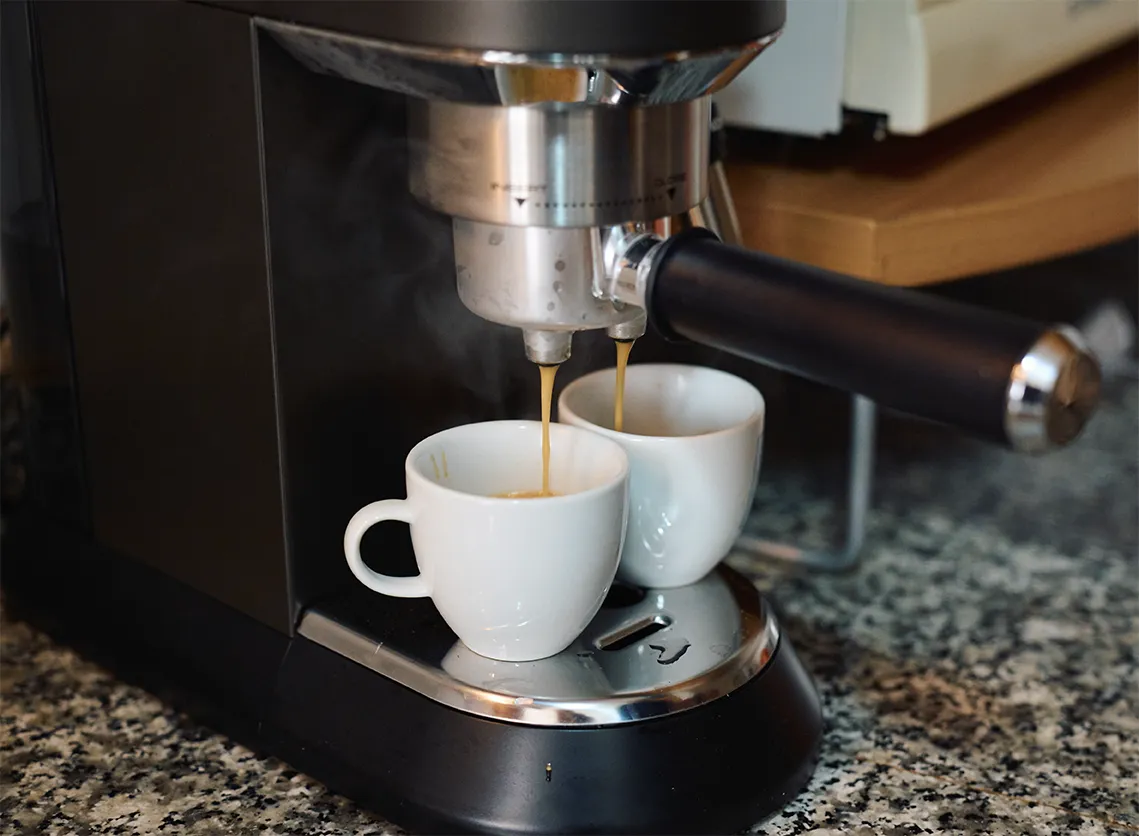
The drawbacks: the machine is so narrow that larger cups don’t fit comfortably on the drip tray, and the panarello produces milk foam — exactly that, foam — rather than properly textured milk. Fortunately, there’s a fix for everything: Tom’s Coffee Corner has a great video walkthrough showing a simple mod that swaps the Dedica’s panarello for a proper steam wand, with noticeably better results.
The Dedica range also includes a couple of notable alternatives. The Dedica Arte tackles the panarello issue head-on by replacing it with a professional steam wand, and it throws in a useful barista accessory kit — a decent tamper (a clear step up from the flimsy plastic one bundled with the standard Dedica) and a stainless steel milk jug. Then there’s the Dedica Maestro Plus, which adds more control over brewing parameters and an automatic milk frother (full review here). Both models cost more than the base Dedica Style, but they’re worth considering if the price works for you or you catch them on sale.