


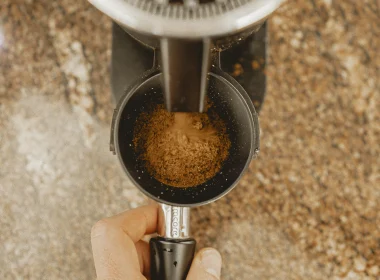


In my review of the Fellow Opus grinder, I highlighted retention as one of its main drawbacks. In reality, retention is a widespread problem across the vast majority of budget grinders — and even higher-end models are not entirely immune to it.
One of the simplest and most effective solutions to this problem is the RDT technique, short for “Ross Droplet Technique,” named after the user who first proposed it on the legendary Home-Barista forum.
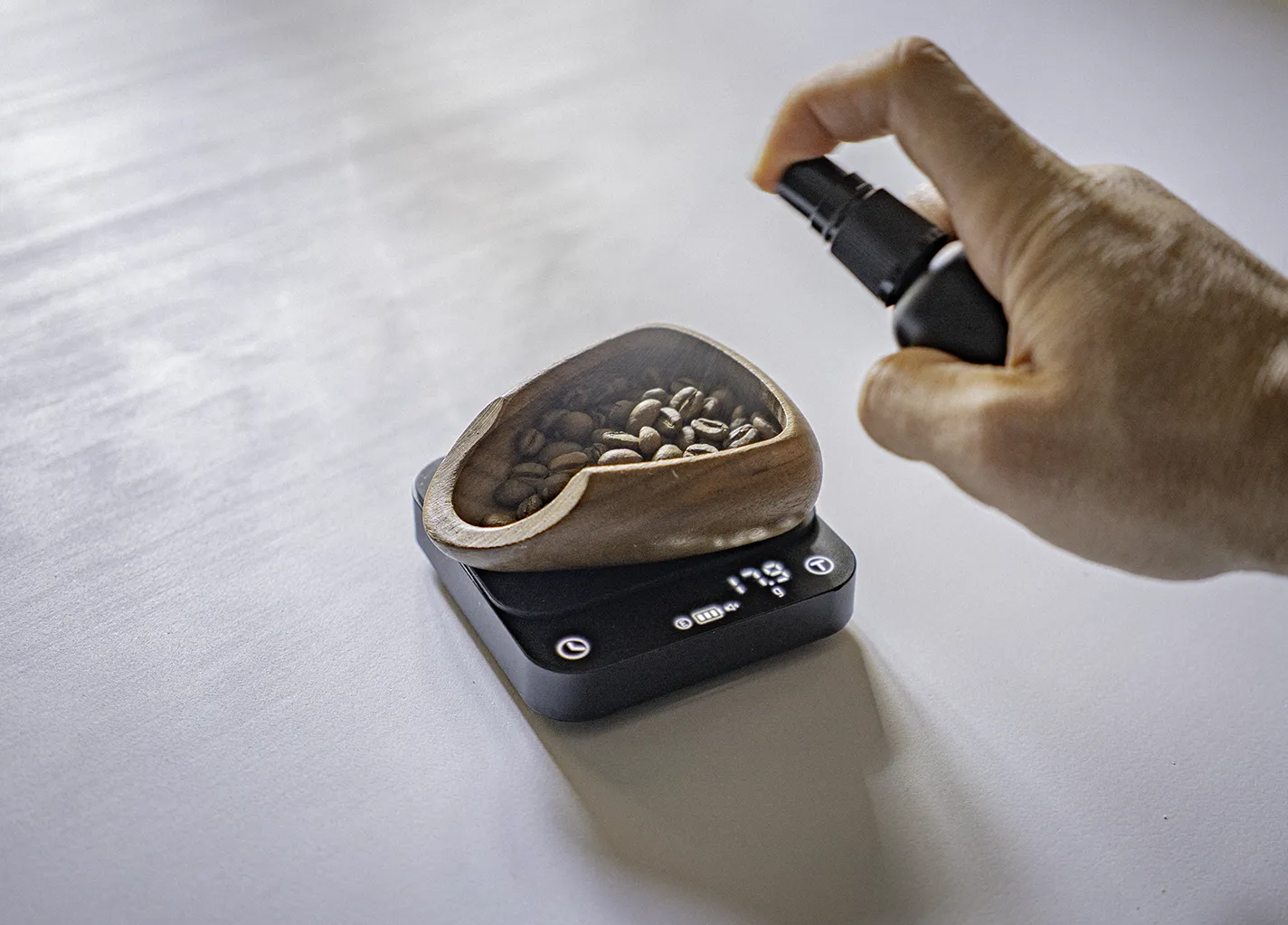
The technique involves lightly misting the coffee beans with a small amount of water just before grinding. This reduces the static charge that builds up during grinding, which in turn minimizes both static and retention, as well as the formation of clumps — a common occurrence when grinding very fine that is typically the leading cause of channeling.
In the video, I show you the huge difference between applying the RDT or not doing it. In the first test, without using this technique, the retention in the grinder is enormous, forcing me to “blow” with the hopper lid and to give several taps to force out all the ground coffee that has been trapped in the burrs.
However, in the second test, I apply the RDT technique, spraying the beans three times with water using a spray bottle, which I tell you more about in my hands on with some of the Normcore accessories. In this second test, retention is minimal, and I only need to give a couple of taps to release all the coffee that I previously weighed on the scale.
Does it Also Improve Extraction?
One ongoing debate around this technique is whether, beyond reducing static, retention, and clump formation, it also improves extraction.
The most rigorous study conducted on this topic is this one, published in the scientific journal Matter. It finds that lightly misting coffee beans with water before grinding not only helps mitigate static and retention, but also increases extraction yield by 10% — which translates to a noticeably more concentrated espresso.
In essence, what the RDT technique achieves is an increase in the solubility of the ground coffee particles. This is particularly relevant for medium or light roast beans, which are inherently less soluble than darker roasts.
To be completely honest, I haven’t personally noticed a significant change in extraction time — but the grinder maintenance benefits alone make it worthwhile. With less retention, you can be confident that the coffee you’re brewing is freshly ground, rather than a mix that includes stale grounds trapped from previous sessions.
Things to Consider
One important caveat worth mentioning upfront: grinders and water don’t mix well, so there is a risk of corroding or rusting the burrs in lower-quality models. That said, any reasonably decent grinder with stainless steel burrs will have no problem with the minimal amount of moisture introduced by a couple of drops sprayed onto the beans.
This leads to another consideration: the optimal amount of water varies significantly depending on the grinder. In my testing with the Fellow Opus, I found that three sprays consistently yielded the best results.
It’s also worth noting that this technique is most useful for espresso, and to a lesser extent for filter coffee. For French press or cold brew, it offers little to no benefit, since coarser grinds generate far less static and retention to begin with.
The gains are also much more pronounced with light or medium roasts, which carry a higher static charge than dark roasts. This was something I observed firsthand with the Fellow Opus: grinding a medium roast produced significant retention, while a dark roast decaf generated almost none.
Overall, if your grinder is giving you trouble with static and retention, the RDT technique is well worth exploring. The benefits are tangible and the downsides are minimal — and it’s worth keeping in mind that any improvement to your espresso quality will likely come more from keeping the burrs clean and free of stale grounds than from any direct effect on extraction.
If You Want to Avoid RDT, You’ll Need to Spend More on a Better Grinder
The RDT technique is, at its core, a workaround — a practical fix for one of the most common shortcomings of coffee grinders, and a particularly acute one in budget models. On the more affordable end of the espresso grinder market, models like the Fellow Opus mentioned earlier, the Sage Smart Grinder Pro, and the Baratza Encore ESP all grind quite well but suffer from notable retention, making RDT a recommended practice if you’re using them as single-dose grinders.
That said, other models such as the DF54 or the updated Baratza Encore ESP Pro have noticeably fewer retention issues without a dramatic jump in price. Dedicated espresso grinders from Eureka — such as the Eureka Mignon Zero S 55 — or significantly higher-end options like the Niche Zero, produce virtually no retention at all.
Ultimately, if you want to eliminate retention entirely, a larger investment is unavoidable. But the RDT technique remains an excellent, practical, and straightforward solution for getting the most out of a budget grinder when upgrading simply isn’t on the table.

